
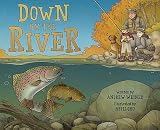
Down by the River
A Family Fly Fishing Story
by Andrew Weiner
Amazon availability
Reading Profile
Should I read this?
Down by the River is a short, lyrical children's tale focused on a single autumn fishing trip shared by a boy, his mother, and his grandfather. Its strengths are quiet sensory detail, ritualized how-to moments about flies and tackle, and a gentle, nostalgic tone that works well aloud. The main limitation is a very thin plot and restrained emotional payoff: adults or older children expecting narrative complexity or clear resolutions may find it overly sentimental and slow.
Read this if...
- •a parent reading bedtime stories to a 3–7-year-old who needs a calming, short autumn tale—works well to wind down and prompt simple conversation about nature and family.
- •an elementary school teacher planning a K–1 circle-time read-aloud during fall—short text and concrete fishing details fit one sitting and invite sensory questions.
- •a grandparent who wants a quiet, relatable story to share with young grandchildren—fishing rituals provide literal talking points and a chance to pass on memory-style storytelling.
Skip this if...
- •you'll likely put it down when you want forward motion or a twist—the book lingers on a single outing and doesn't deliver strong plot beats.
- •annoying if you prefer sharp humor or high energy—this is deliberately slow and sentimental, which can feel repetitive.
- •not for readers seeking deep character study or explicit explanations—the emotional hints are subtle and some will find them unsatisfying rather than evocative.
One beautiful autumn day, Art sets out with his mother and grandfather for a fishing trip. Fishing days are Art?s favorite. He loves learning the ropes from Grandpa?the different kinds of flies and tackle and the trout that frequent their favorite river. Art especially appreciates Grandpa?s stories. But, this time, hearing the story about Mom?s big...
Before You Buy
Reading Specifications
Difficulty:hard
Audience Fit
- a parent reading bedtime stories to a 3–7-year-old who needs a calming, short autumn tale—works well to wind down and prompt simple conversation about nature and family.
- an elementary school teacher planning a K–1 circle-time read-aloud during fall—short text and concrete fishing details fit one sitting and invite sensory questions.
- a grandparent who wants a quiet, relatable story to share with young grandchildren—fishing rituals provide literal talking points and a chance to pass on memory-style storytelling.
- you'll likely put it down when you want forward motion or a twist—the book lingers on a single outing and doesn't deliver strong plot beats.
- annoying if you prefer sharp humor or high energy—this is deliberately slow and sentimental, which can feel repetitive.
- not for readers seeking deep character study or explicit explanations—the emotional hints are subtle and some will find them unsatisfying rather than evocative.
Check formats, pricing, and availability options for Kindle, physical print, or audiobooks directly.
View available editions on AmazonKey themes
Why recommended
appears in Fishing and Fiction.
Recommendation Signals
Recommendation proof is sourced from public posts, interviews, reading lists, and cited references.
No verified recommendation proof available yet.
Ready to read Down by the River?
Check formats, pricing, and availability options directly on Amazon.
Appears In

Not sure if this is the right fit?
Consider The Republic by Plato. Recommended by 13 sources.
“Plato stages an extended Socratic conversation that moves from concrete questions about justice into broad proposals about an ideal city, the structure of the soul, and what counts as reality and knowledge. Reading alternates brisk question-and-answer snippets with long, cumulative demonstrations that reward careful attention and annotation. Main value: a wealth of thought experiments for testing political and ethical intuitions. Main limitation: repetitive refutations, long policy sketches and dense metaphysical passages can feel abstruse and slow; patience and some philosophical background help.”
Similar books



How recommendation signals are reviewed
Each recommendation is collected from a public source — interviews, articles, or curated lists — and linked to its original URL. Books with many verifiable recommendations from respected people rank higher.