
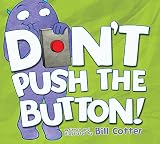
Don't Push the Button!
by Bill Cotter
Reading Profile
Should I read this?
Brief and mischievous, Don't Push the Button! is a picture-book gag built around a single running joke: a loud warning not to press a tempting button and the chaos that follows when someone can't resist. It shines as a read-aloud where timing, voice, and audience participation sell every page-turn. Its useful part is immediacy — quick laughs and repeat-read appeal for toddlers. Limitation: the joke is narrow and repetitive, so adults or older children may tire of the premise after a few reads.
Read this if...
- •parent reading to a restless 2–4-year-old at bedtime who needs an energetic, short story to hold attention — the book invites participation and predictable payoff.
- •preschool teacher leading circle time who wants a quick group read that encourages shouting, timing and turn-taking — easy to dramatize and repeat with kids.
- •caregiver in a waiting room needing a two- or three-minute distraction for a bored toddler — immediate visual joke and fast resolution keep focus.
Skip this if...
- •you'll likely put it down when the same gag repeats and either you or the child stop responding to the setup — the middle can feel like a loop.
- •annoying if you prefer calm, realistic picture books or stories that teach a clear lesson rather than relying on a prank-like payoff.
- •you'll lose interest if you want variety in plot or character development — the book is essentially one idea stretched across the pages.
There's only one rule in Larry's book: don't push the button.(Seriously, don't even think about it!)Even if it does look kind of nice, you must never push the button. Who knows what would happenOkay, quick. No one is looking... push the button.Uh, oh....
Before You Buy
Reading Specifications
Difficulty:easy
Audience Fit
- parent reading to a restless 2–4-year-old at bedtime who needs an energetic, short story to hold attention — the book invites participation and predictable payoff.
- preschool teacher leading circle time who wants a quick group read that encourages shouting, timing and turn-taking — easy to dramatize and repeat with kids.
- caregiver in a waiting room needing a two- or three-minute distraction for a bored toddler — immediate visual joke and fast resolution keep focus.
- you'll likely put it down when the same gag repeats and either you or the child stop responding to the setup — the middle can feel like a loop.
- annoying if you prefer calm, realistic picture books or stories that teach a clear lesson rather than relying on a prank-like payoff.
- you'll lose interest if you want variety in plot or character development — the book is essentially one idea stretched across the pages.
Check formats, pricing, and availability options for Kindle, physical print, or audiobooks directly.
View available editions on AmazonKey themes
Why recommended
appears in For 3 Year Olds and Fiction.
Recommendation Signals
Recommendation proof is sourced from public posts, interviews, reading lists, and cited references.
No verified recommendation proof available yet.
Appears In
Not sure if this is the right fit?
Consider The Republic by Plato. Recommended by 13 sources.
“Plato stages an extended Socratic conversation that moves from concrete questions about justice into broad proposals about an ideal city, the structure of the soul, and what counts as reality and knowledge. Reading alternates brisk question-and-answer snippets with long, cumulative demonstrations that reward careful attention and annotation. Main value: a wealth of thought experiments for testing political and ethical intuitions. Main limitation: repetitive refutations, long policy sketches and dense metaphysical passages can feel abstruse and slow; patience and some philosophical background help.”
Similar books
How recommendation signals are reviewed
Each recommendation is collected from a public source — interviews, articles, or curated lists — and linked to its original URL. Books with many verifiable recommendations from respected people rank higher.