Natural World
by Aj Wood
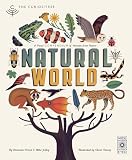
Brightly illustrated and organized as information charts, Curiositree reads like a visual primer for young naturalists. What works best is its approachable snapshots of adaptations—clear labels, playful art and side-by-side comparisons make concepts like camouflage, feeding strategies and reproduction tangible without lengthy prose. Limitations: text is terse and general, so older kids or adults seeking depth will find it skimpy, and the chart format occasionally repeats the same layout until it feels formulaic rather than exploratory.
This summary and audience guidance are AI-generated from the book's description and its recommendation history, last updated June 2026. Recommendations, quotes and sources elsewhere on this page come from published material and are not generated.
A first introduction to the natural world that looks at the myriad ways in which plants and animals have adapted to give themselves the best chance of survival. Natural World explores and explains why living things look and behave the way they do in a series of visually compelling information charts....
Difficulty:easy
Check formats, pricing, and availability options for Kindle, physical print, or audiobooks directly.
View available editions on AmazonWhy recommended
appears in Nature, Hobbies, and Children's.
Recommendation proof is sourced from public posts, interviews, reading lists, and cited references.
No verified recommendation proof available yet.
Check formats, pricing, and availability options directly on Amazon.
Consider From Seed to Plant by Gail Gibbons.
“Bright, picture-driven, and firmly aimed at early elementary listeners, this book walks through pollination, seed formation, and germination in clear, child-accessible steps. The strongest value is the combination of simple, age-appropriate vocabulary and colorful diagrams that make basic plant processes memorable during a single read-aloud. Its main limitation is scope: adults or older kids seeking depth or experimental instructions will find the text spare and the explanations high-level rather than detailed. No hands-on exercises are provided.”
Each recommendation is collected from a public source — interviews, articles, or curated lists — and linked to its original URL. Books with many verifiable recommendations from respected people rank higher.