Welcome to the Museum
by Jenny Broom
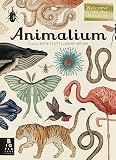
Animalium arranges over 200 full-color specimens on museum-style double-page 'walls,' pairing lush, detailed illustrations with short caption-style labels. Reading it is like wandering a curated gallery: spreads are visually striking and mostly self-contained, easy to dip into or share aloud. The book's strength is visual reference and decorative specimen plates; its limit is the concise, descriptive text, which seldom expands into narratives or deep taxonomic detail. Readers seeking long-form natural history or field-guide precision will likely find it too thin.
This summary and audience guidance are AI-generated from the book's description and its recommendation history, last updated June 2026. Recommendations, quotes and sources elsewhere on this page come from published material and are not generated.
Welcome to the Museum is a series of books set on the "walls" of the printed page, showcasing the world's finest collections of objects from natural history to art. Open 365 days a year and unrestricted by the constraints of physical space, each title in this series is organized into galleries that display more than 200 fullcolor specimens accompa...
Difficulty:medium
Check formats, pricing, and availability options for Kindle, physical print, or audiobooks directly.
View available editions on AmazonWhy recommended
appears in Nature, Hobbies, and Children's.
Recommendation proof is sourced from public posts, interviews, reading lists, and cited references.
No verified recommendation proof available yet.
Check formats, pricing, and availability options directly on Amazon.
Consider From Seed to Plant by Gail Gibbons.
“Bright, picture-driven, and firmly aimed at early elementary listeners, this book walks through pollination, seed formation, and germination in clear, child-accessible steps. The strongest value is the combination of simple, age-appropriate vocabulary and colorful diagrams that make basic plant processes memorable during a single read-aloud. Its main limitation is scope: adults or older kids seeking depth or experimental instructions will find the text spare and the explanations high-level rather than detailed. No hands-on exercises are provided.”
Each recommendation is collected from a public source — interviews, articles, or curated lists — and linked to its original URL. Books with many verifiable recommendations from respected people rank higher.