
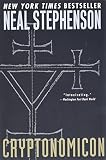
Cryptonomicon
by Neal Stephenson


Recommended by Tim Ferriss and Ev Williams
Check price on AmazonRecommended by public sources
Amazon availability
Reading Profile
Should I read this?
Cryptonomicon alternates a World War II codebreaking strand with a 1990s tech/cryptography strand, offering long passages of technical explanation, logistical detail, and witty aside. Its useful part is the savoring of technical lore and the odd pleasure of seeing historical secrecy folded into modern digital schemes. Its main limitation is scope: sprawling digressions into math, military procedure, and startup minutiae repeatedly slow momentum. Tone and pace shift often, which rewards patience but frustrates readers who want a tightly focused, character-driven novel.
Read this if...
- •a software engineer at a startup needing a long, immersive read who enjoys nerdy technical detail and world-building; the book supplies pages of cryptography and engineering texture to savor during extended downtime.
- •a history graduate student preparing a seminar on wartime intelligence who wants color and dramatic scenes about codebreaking and military logistics rather than a dry textbook; the WWII strand supplies vivid procedural snapshots.
- •a cybersecurity consultant on sabbatical or long trip looking for a doorstopper to occupy many hours; the alternating timelines and dense detail make it easy to dive into for big reading sessions.
Skip this if...
- •you'll likely put it down when long blocks of mathematical or technical exposition interrupt plot forward motion — those digressions are a common drop-off point.
- •annoying if you prefer tight, character-driven novels: the book favors technical puzzles and plot mechanics over intimate emotional arcs.
- •lose patience if tonal whiplash bothers you — the swing from wartime moral urgency to nerdy startup banter can feel jarring; no exercises or hands-on guidance for readers seeking practical takeaways.
With this extraordinary first volume in an epochmaking masterpiece, Neal Stephenson hacks into the secret histories of nations and the private obsessions of men, decrypting with dazzling virtuosity the forces that shaped this century.In 1942, Lawrence Pritchard Waterhouse?mathematical genius and young Captain in the U.S. Navy?is assigned to detach...
Before You Buy
Reading Specifications
Difficulty:hard
Audience Fit
- a software engineer at a startup needing a long, immersive read who enjoys nerdy technical detail and world-building; the book supplies pages of cryptography and engineering texture to savor during extended downtime.
- a history graduate student preparing a seminar on wartime intelligence who wants color and dramatic scenes about codebreaking and military logistics rather than a dry textbook; the WWII strand supplies vivid procedural snapshots.
- a cybersecurity consultant on sabbatical or long trip looking for a doorstopper to occupy many hours; the alternating timelines and dense detail make it easy to dive into for big reading sessions.
- you'll likely put it down when long blocks of mathematical or technical exposition interrupt plot forward motion — those digressions are a common drop-off point.
- annoying if you prefer tight, character-driven novels: the book favors technical puzzles and plot mechanics over intimate emotional arcs.
- lose patience if tonal whiplash bothers you — the swing from wartime moral urgency to nerdy startup banter can feel jarring; no exercises or hands-on guidance for readers seeking practical takeaways.
Check formats, pricing, and availability options for Kindle, physical print, or audiobooks directly.
View available editions on AmazonKey themes
Why recommended
Recommended by 6 sources and appears in Cryptography, Most Recommended Books, and Science Fiction.
Recommended by notable people
People and public figures who have recommended this book.
Recommendation Signals
Recommendation proof is sourced from public posts, interviews, reading lists, and cited references.
Ready to read Cryptonomicon?
Check formats, pricing, and availability options directly on Amazon.
Appears In
Not sure if this is the right fit?
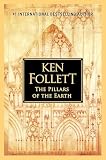
Consider The Pillars of the Earth by Ken Follett. Recommended by 5 sources.
“This sprawling, detail-rich historical novel follows cathedral builders, nobles, and townspeople across decades, delivering immersive scene-setting and a steady accumulation of plotlines. Its useful part is the sustained attention to craft—architecture, politics, rivalry—that makes the medieval world tangible. The main limitation is repetitive melodrama and swings in pacing: long, satisfying set pieces sit beside stretches that feel slow or contrived. Better read slowly rather than skimmed; readers who stick it out will find payoff in the concluding convergences.”
Similar books
How recommendation signals are reviewed
Each recommendation is collected from a public source — interviews, articles, or curated lists — and linked to its original URL. Books with many verifiable recommendations from respected people rank higher.