

Complete Stories
by Clarice Lispector
Amazon availability
Reading Profile
Should I read this?
A wide-ranging single-volume of Clarice Lispector's short fiction delivers brief, inward-focused pieces that often trade plot for sudden psychological or linguistic turns. Best value comes from encountering her stylistic range—from terse, enigmatic flashes to longer, fevered monologues—so you can taste how her voice changes over time. Limitation: many stories lean toward opacity and repetition, which can feel dense or self-referential. This is a collection to read slowly and selectively rather than as a casual beach read.
Read this if...
- •a fiction writer drafting a 5–7 story microfiction collection with a submission deadline in a few months, who needs immediate models of how to sustain psychological intensity without plot — Lispector's short pieces offer sentence-level tactics and varied endings you can emulate now
- •a comparative-literature graduate student assembling a syllabus for a spring seminar on modern Brazilian prose, who wants a single volume that shows an author's stylistic development from early to late work — this collection provides assignable texts spanning that arc without searching multiple editions
- •an early-career high-school English teacher planning a two-week unit on voice and interior monologue for next month, who needs short, self-contained stories students can read, annotate, and discuss in class — the book supplies brief, intense pieces suited for close reading sessions
Skip this if...
- •you'll likely put it down when narrative dissolves into prolonged interior monologue and you'd rather follow concrete events than linguistic puzzles
- •annoying if you prefer tidy resolutions or consistent tone — many pieces end on ambiguity or elliptical images rather than closure
- •no exercises; not for readers who want guided reflection or practical takeaways rather than open-ended literary provocation
Here, gathered in one volume, are the stories that made Clarice a Brazilianlegend. Originally a cloth edition of 86 stories, now we have 89 in all, covering Lispector's amazing career, from her teenage years to her deathbed. In these pages, we meet teenagers becoming aware of their sexual and artistic powers, humdrum housewives whose lives are shat...
Before You Buy
Reading Specifications
Difficulty:hard
Audience Fit
- a fiction writer drafting a 5–7 story microfiction collection with a submission deadline in a few months, who needs immediate models of how to sustain psychological intensity without plot — Lispector's short pieces offer sentence-level tactics and varied endings you can emulate now
- a comparative-literature graduate student assembling a syllabus for a spring seminar on modern Brazilian prose, who wants a single volume that shows an author's stylistic development from early to late work — this collection provides assignable texts spanning that arc without searching multiple editions
- an early-career high-school English teacher planning a two-week unit on voice and interior monologue for next month, who needs short, self-contained stories students can read, annotate, and discuss in class — the book supplies brief, intense pieces suited for close reading sessions
- you'll likely put it down when narrative dissolves into prolonged interior monologue and you'd rather follow concrete events than linguistic puzzles
- annoying if you prefer tidy resolutions or consistent tone — many pieces end on ambiguity or elliptical images rather than closure
- no exercises; not for readers who want guided reflection or practical takeaways rather than open-ended literary provocation
Check formats, pricing, and availability options for Kindle, physical print, or audiobooks directly.
View available editions on AmazonKey themes
Why recommended
appears in About Brasil and Fiction.
Recommendation Signals
Recommendation proof is sourced from public posts, interviews, reading lists, and cited references.
No verified recommendation proof available yet.
Ready to read Complete Stories?
Check formats, pricing, and availability options directly on Amazon.
Appears In
Not sure if this is the right fit?
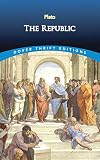
Consider The Republic by Plato. Recommended by 13 sources.
“Plato stages an extended Socratic conversation that moves from concrete questions about justice into broad proposals about an ideal city, the structure of the soul, and what counts as reality and knowledge. Reading alternates brisk question-and-answer snippets with long, cumulative demonstrations that reward careful attention and annotation. Main value: a wealth of thought experiments for testing political and ethical intuitions. Main limitation: repetitive refutations, long policy sketches and dense metaphysical passages can feel abstruse and slow; patience and some philosophical background help.”
Similar books

How recommendation signals are reviewed
Each recommendation is collected from a public source — interviews, articles, or curated lists — and linked to its original URL. Books with many verifiable recommendations from respected people rank higher.