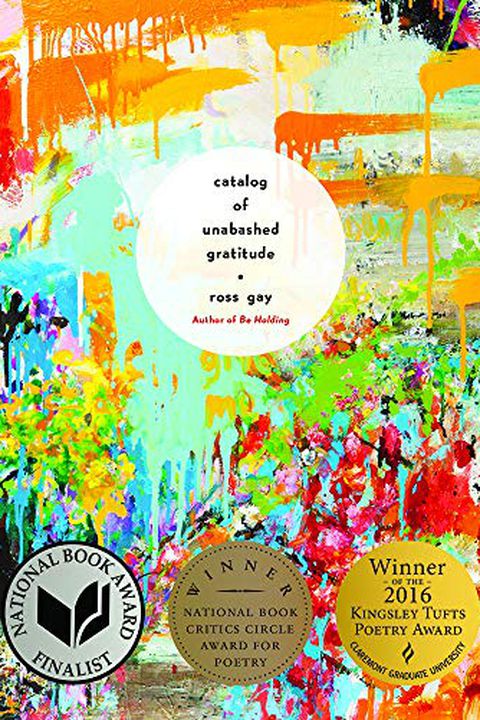
by Ross Gay
Ross Gay's Catalog of Unabashed Gratitude settles into a steady, sensory rhythm of short lyrics, lists, and asides that convert a gardener's attention into language about loss and what lasts. Reading feels tactile and hospitable: soil, fruit, and small domestic scenes make gratitude and grief sit beside each other. Its useful part is voice—generous, playful, often resisting tidy consolation while training attention on ordinary things. Main limitation: the cataloging impulse and repeated orchard imagery can feel insistent; readers wanting narrative drive or formal variety may stall.
This summary and audience guidance are AI-generated from the book's description and its recommendation history, last updated May 2026. Recommendations, quotes and sources elsewhere on this page come from published material and are not generated.
Catalog of Unabashed Gratitude is a sustained meditation on that which goes away_x0097_loved ones, the seasons, the earth as we know it_x0097_that tries to find solace in the processes of the garden and the orchard. That is, this is a book that studies the wisdom of the garden and orchard, those places where all_x0097_death, sorrow, loss_x0097_is converted into what might...
Difficulty:hard
Check formats, pricing, and availability options for Kindle, physical print, or audiobooks directly.
View available editions on AmazonWhy recommended
appears in Poetry, Poetry, and Fiction.
Recommendation proof is sourced from public posts, interviews, reading lists, and cited references.
No verified recommendation proof available yet.
Check formats, pricing, and availability options directly on Amazon.
Consider The Republic by Plato. Recommended by 13 sources.
“Plato stages an extended Socratic conversation that moves from concrete questions about justice into broad proposals about an ideal city, the structure of the soul, and what counts as reality and knowledge. Reading alternates brisk question-and-answer snippets with long, cumulative demonstrations that reward careful attention and annotation. Main value: a wealth of thought experiments for testing political and ethical intuitions. Main limitation: repetitive refutations, long policy sketches and dense metaphysical passages can feel abstruse and slow; patience and some philosophical background help.”
Each recommendation is collected from a public source — interviews, articles, or curated lists — and linked to its original URL. Books with many verifiable recommendations from respected people rank higher.