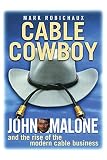
John Malone and the Rise of the Modern Cable Business
by Mark Robichaux
Recommended by Auren Hoffman and Ian Cassel
Recommended by public sources
Amazon availability
Cable Cowboy reads like an inside account of a cable titan's rise and the business maneuvers that remade an entertainment industry. The narrative rewards readers who want blow-by-blow dealmaking, strategic acquisitions, and the personalities inside boardrooms; that granular tradecraft is the book's main value. It grows tedious when legal/financial minutiae pile up and opinionated shorthand nudges toward admiration or moralizing; the balance between biography and industry chronicle sometimes tips toward repetition. Useful for context and anecdote, weaker for tight analytical synthesis.
This summary and audience guidance are AI-generated from the book's description and its recommendation history, last updated June 2026. Recommendations, quotes and sources elsewhere on this page come from published material and are not generated.
An inside look at a cable titan and his industry John Malone, hailed as one of the great unsung heroes of our age by some and reviled by others as a ruthless robber baron, is revealed as a bit of both in Cable Cowboy. For more than twentyfive years, Malone has dominated the cable television industry, shaping the world of entertainment and communic...
Difficulty:hard
Check formats, pricing, and availability options for Kindle, physical print, or audiobooks directly.
View available editions on AmazonWhy recommended
Recommended by 3 sources and appears in Most Recommended Books, Entrepreneurship, and Business.
People and public figures who have recommended this book.
Recommendation proof is sourced from public posts, interviews, reading lists, and cited references.
Check formats, pricing, and availability options directly on Amazon.
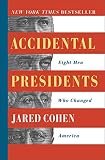
Consider Accidental Presidents by Jared Cohen. Recommended by 10 sources.
“Accidental Presidents offers eight narrative portraits of men who succeeded to the U.S. presidency without election, using anecdote-rich scenes and readable context to show how personality and circumstance interact with office power. It’s strongest as a set of self-contained stories that make succession stakes concrete for non-specialist readers; it does not prioritize dense archival argument or exhaustive methodology, so expect some interpretive generalizations and repeated themes across cases. Use it for fast historical orientation rather than scholarly deep-dives.”

Each recommendation is collected from a public source — interviews, articles, or curated lists — and linked to its original URL. Books with many verifiable recommendations from respected people rank higher.