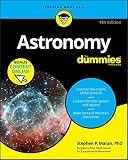
by Stephen P. Maran
A friendly, heavily illustrated primer that turns night-sky basics into step-by-step reference material. Star maps, charts and full-color photos make object identification and beginning observing straightforward, and the prose aims for clarity rather than technical rigor. The most useful parts are the observing tips and maps you can actually use at the telescope; the main limitation is shallow treatment of astrophysical theory and few numbers or derivations for readers wanting depth. Best read alongside a backyard telescope rather than a university syllabus.
This summary and audience guidance are AI-generated from the book's description and its recommendation history, last updated June 2026. Recommendations, quotes and sources elsewhere on this page come from published material and are not generated.
Your updated guide to exploring the night sky Do you know the difference between a red giant and a white dwarf From asteroids to black holes, this easytounderstand guide takes you on a grand tour of the universe. Featuring updated star maps, charts, and an insert with gorgeous fullcolor photographs, Astronomy For Dummies provides an easytofol...
Difficulty:hard
Check formats, pricing, and availability options for Kindle, physical print, or audiobooks directly.
View available editions on AmazonWhy recommended
appears in Science and Nonfiction.
Recommendation proof is sourced from public posts, interviews, reading lists, and cited references.
No verified recommendation proof available yet.
Check formats, pricing, and availability options directly on Amazon.
Consider Astrophysics for People in a Hurry by Neil deGrasseTyson. Recommended by 2 sources.
“Tyson writes short, conversational chapters that translate cosmic scale, basic astrophysics, and the arc of cosmic history into vivid metaphors and brisk explanations. The most useful part is orientation—memorable anchors and mental images that make large ideas stick without equations. Annoying or limiting: frequent brevity means topics are sketched rather than developed, and recurring jokes or one-liners can feel surface-level. Best as an appetite-whetter or primer, not a deep technical course. Read in short sessions; it hands you curiosity more than instruction.”
Each recommendation is collected from a public source — interviews, articles, or curated lists — and linked to its original URL. Books with many verifiable recommendations from respected people rank higher.