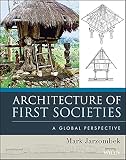
A Global Perspective
by Mark M. Jarzombek
Starts as a wide-angle tour of human-built environments from early settlements to pre-Columbian societies, mixing architectural description with cultural context. Most useful as a comparative primer: it stitches regional case studies into a single narrative so readers can trace recurring forms and functions across time and place. Limitation: prose leans academic and occasionally pauses for granular archaeological or typological detail, which slows momentum for readers seeking a lively travelogue or abundant visual plates.
This summary and audience guidance are AI-generated from the book's description and its recommendation history, last updated June 2026. Recommendations, quotes and sources elsewhere on this page come from published material and are not generated.
Starting with the dawn of human society, through early civilizations, to the preColumbian American tribes, "Architecture, of First Societies: A Global Perspective" traces the different cultural formations that developed in various places throughout the world to form the built environment. Looking through the lens of both time and geography, the his...
Difficulty:hard
Check formats, pricing, and availability options for Kindle, physical print, or audiobooks directly.
View available editions on AmazonWhy recommended
appears in Architecture, Architecture, and Nonfiction.
Recommendation proof is sourced from public posts, interviews, reading lists, and cited references.
No verified recommendation proof available yet.
Check formats, pricing, and availability options directly on Amazon.
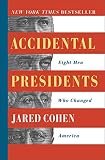
Consider Accidental Presidents by Jared Cohen. Recommended by 10 sources.
“Accidental Presidents offers eight narrative portraits of men who succeeded to the U.S. presidency without election, using anecdote-rich scenes and readable context to show how personality and circumstance interact with office power. It’s strongest as a set of self-contained stories that make succession stakes concrete for non-specialist readers; it does not prioritize dense archival argument or exhaustive methodology, so expect some interpretive generalizations and repeated themes across cases. Use it for fast historical orientation rather than scholarly deep-dives.”

Each recommendation is collected from a public source — interviews, articles, or curated lists — and linked to its original URL. Books with many verifiable recommendations from respected people rank higher.