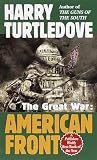
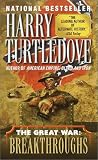
Great War, Book 1
by Harry Turtledove
American Front opens from a single counterfactual premise — the United States and the Confederate States enter World War I on opposite sides — and carries that divergence through politics, diplomacy, and battlefield planning. it reads as a sustained, map-conscious saga that rewards patience: big-picture geopolitical ripple effects and campaign detail are the book’s payoff. The main limitation is pace: repeated logistical and strategic set-pieces can feel long and slow, delaying emotional or character payoff for readers expecting brisk narrative momentum.
This summary and audience guidance are AI-generated from the book's description and its recommendation history, last updated June 2026. Recommendations, quotes and sources elsewhere on this page come from published material and are not generated.
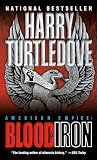
When the Great War engulfed Europe in 1914, the United States and the Confederate States of America, bitter enemies for five decades, entered the fray on opposite sides: the United States aligned with the newly strong Germany, while the Confederacy joined forces with their longtime allies, Britain and France. But it soon became clear to both sides ...
Difficulty:hard
Check formats, pricing, and availability options for Kindle, physical print, or audiobooks directly.
View available editions on AmazonRecommendation proof is sourced from public posts, interviews, reading lists, and cited references.
No verified recommendation proof available yet.
Check formats, pricing, and availability options directly on Amazon.
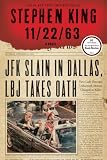
Consider 11/22/63 by Stephen King. Recommended by 4 sources.
“Starts as a lean, suspenseful time-travel premise that quickly settles into an immersive, character-focused saga. Its chief useful part is the way everyday 1960s small-town life and personal relationships make the historical stakes feel immediate; the novel rewards readers who relish atmosphere and slow moral puzzles. The main limitation is length and digressions—long domestic passages and episodic subplots stretch the middle and can undercut urgency for readers who wanted a tighter thriller.”
Each recommendation is collected from a public source — interviews, articles, or curated lists — and linked to its original URL. Books with many verifiable recommendations from respected people rank higher.