
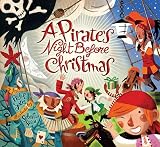
A Pirate's Night Before Christmas
by Philip Yates
Amazon availability
Reading Profile
Should I read this?
Philip Yates’s A Pirate's Night Before Christmas is a noisy, playful picture-book rewrite that swaps sugarplums for treasure chests and replaces the traditional holiday visitor with a swashbuckling surprise. Bright, action-packed illustrations and quick rhyme invite loud read-alouds and theatrical voices; what works best is holiday silliness rather than quiet nostalgia. Limitation: the energy and pun-heavy pirate shtick flatten nuance—readers seeking a tender, faithful holiday poem will find the tone one-note. Best enjoyed in interactive settings where audience participation is welcome.
Read this if...
- •Parent performing a holiday read-aloud for a 3–7-year-old who loves pirates and loud voices, because the book rewards dramatic delivery and call-and-response fun.
- •Elementary school teacher planning a K–2 holiday storytime who needs high-energy, comedic material to hold mixed attention spans and encourage participation.
- •Children’s librarian curating a seasonal shelf and a themed storytime for early listeners who respond to costume-play, props, and visual spectacle.
Skip this if...
- •You’ll likely put it down when the pirate puns and raucous rhyme pile up and the narrative momentum stalls — if you prefer spare text or soothing cadence, this will grate.
- •Annoying if you want a faithful retelling or gentle sentiment; the tone stays jokey and one-note rather than tender or reflective.
- •Not for quiet bedtime routines or very young, easily startled listeners; the rowdy pace and loud beats work against sleepytime calm.
Young mateys will find plenty of holiday joy in this humorous, colorful, and thoroughly piratical version of the beloved Clement C. Moore classic. On this ship of mischievous brigands_x0097_who have visions of treasure chests, not sugarplums, dancing in their heads_x0097_you wouldn_x0092_t expect a visit from nice St. Nick. Instead, here comes Sir Peggedy, with his ...
Before You Buy
Reading Specifications
Difficulty:easy
Audience Fit
- Parent performing a holiday read-aloud for a 3–7-year-old who loves pirates and loud voices, because the book rewards dramatic delivery and call-and-response fun.
- Elementary school teacher planning a K–2 holiday storytime who needs high-energy, comedic material to hold mixed attention spans and encourage participation.
- Children’s librarian curating a seasonal shelf and a themed storytime for early listeners who respond to costume-play, props, and visual spectacle.
- You’ll likely put it down when the pirate puns and raucous rhyme pile up and the narrative momentum stalls — if you prefer spare text or soothing cadence, this will grate.
- Annoying if you want a faithful retelling or gentle sentiment; the tone stays jokey and one-note rather than tender or reflective.
- Not for quiet bedtime routines or very young, easily startled listeners; the rowdy pace and loud beats work against sleepytime calm.
Check formats, pricing, and availability options for Kindle, physical print, or audiobooks directly.
View available editions on AmazonKey themes
Why recommended
appears in Pirate and Fiction.
Recommendation Signals
Recommendation proof is sourced from public posts, interviews, reading lists, and cited references.
No verified recommendation proof available yet.
Ready to read A Pirate's Night Before Christmas?
Check formats, pricing, and availability options directly on Amazon.
Appears In
Not sure if this is the right fit?
Consider The Republic by Plato. Recommended by 13 sources.
“Plato stages an extended Socratic conversation that moves from concrete questions about justice into broad proposals about an ideal city, the structure of the soul, and what counts as reality and knowledge. Reading alternates brisk question-and-answer snippets with long, cumulative demonstrations that reward careful attention and annotation. Main value: a wealth of thought experiments for testing political and ethical intuitions. Main limitation: repetitive refutations, long policy sketches and dense metaphysical passages can feel abstruse and slow; patience and some philosophical background help.”
Similar books


How recommendation signals are reviewed
Each recommendation is collected from a public source — interviews, articles, or curated lists — and linked to its original URL. Books with many verifiable recommendations from respected people rank higher.