
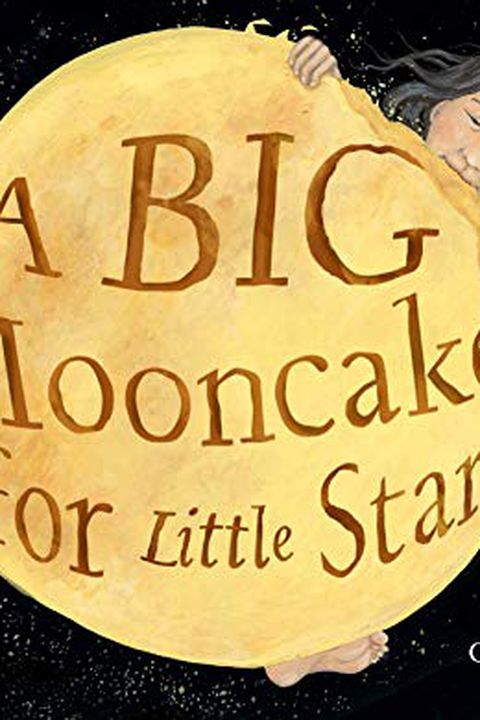
A Big Mooncake for Little Star
by Grace Lin
Reading Profile
Should I read this?
A Big Mooncake for Little Star reads like a lullaby: short, rhythmic text paired with warm, textured art by Grace Lin that stages a small act of mischief and its visual consequences. The book’s useful part is turning an abstract natural cycle into an accessible, charming family ritual that invites repeat readings. Its limitation is brevity and whimsy—readers seeking a factual or more complex narrative about the moon will find it slight, and adults wanting deeper plot development may feel underfed.
Read this if...
- •a preschool parent doing nightly read-alouds who wants a gentle, repeatable story to explain moon phases in storyform; it fits bedtime and simple questions about the moon
- •a kindergarten teacher planning a circle-time theme on nighttime who needs a visual, short read that ties a child's impulse (taste-testing) to predictable change (the moon’s phases)
- •a children’s librarian assembling a seasonal display on moon and sky who needs an eye-catching picture book with clear visuals and a memorable hook for young listeners
Skip this if...
- •you'll likely put it down when you expect a factual explanation of moon phases — the narrative is whimsical, not a science lesson
- •annoying if you prefer dense plots or complex characters; the story is deliberately simple and circular, which can feel repetitive after a few reads
- •not for older kids or adults seeking long-form fiction or nonfiction about astronomy — pacing and scope are very limited and the book has no hands-on activities or exercises
A gorgeous picture book that tells a whimsical origin story of the phases of the moon, from awardwinning, bestselling authorillustrator Grace LinPat, pat, pat...Little Star's soft feet tiptoed to the Big Mooncake.Little Star loves the delicious Mooncake that she bakes with her mama. But she's not supposed to eat any yet! What happens when she can...
Before You Buy
Reading Specifications
Difficulty:easy
Audience Fit
- a preschool parent doing nightly read-alouds who wants a gentle, repeatable story to explain moon phases in storyform; it fits bedtime and simple questions about the moon
- a kindergarten teacher planning a circle-time theme on nighttime who needs a visual, short read that ties a child's impulse (taste-testing) to predictable change (the moon’s phases)
- a children’s librarian assembling a seasonal display on moon and sky who needs an eye-catching picture book with clear visuals and a memorable hook for young listeners
- you'll likely put it down when you expect a factual explanation of moon phases — the narrative is whimsical, not a science lesson
- annoying if you prefer dense plots or complex characters; the story is deliberately simple and circular, which can feel repetitive after a few reads
- not for older kids or adults seeking long-form fiction or nonfiction about astronomy — pacing and scope are very limited and the book has no hands-on activities or exercises
Check formats, pricing, and availability options for Kindle, physical print, or audiobooks directly.
View available editions on AmazonKey themes
Why recommended
appears in Childrens and Fiction.
Recommendation Signals
Recommendation proof is sourced from public posts, interviews, reading lists, and cited references.
No verified recommendation proof available yet.
Appears In
Not sure if this is the right fit?
Consider The Republic by Plato. Recommended by 13 sources.
“Plato stages an extended Socratic conversation that moves from concrete questions about justice into broad proposals about an ideal city, the structure of the soul, and what counts as reality and knowledge. Reading alternates brisk question-and-answer snippets with long, cumulative demonstrations that reward careful attention and annotation. Main value: a wealth of thought experiments for testing political and ethical intuitions. Main limitation: repetitive refutations, long policy sketches and dense metaphysical passages can feel abstruse and slow; patience and some philosophical background help.”
Similar books
How recommendation signals are reviewed
Each recommendation is collected from a public source — interviews, articles, or curated lists — and linked to its original URL. Books with many verifiable recommendations from respected people rank higher.