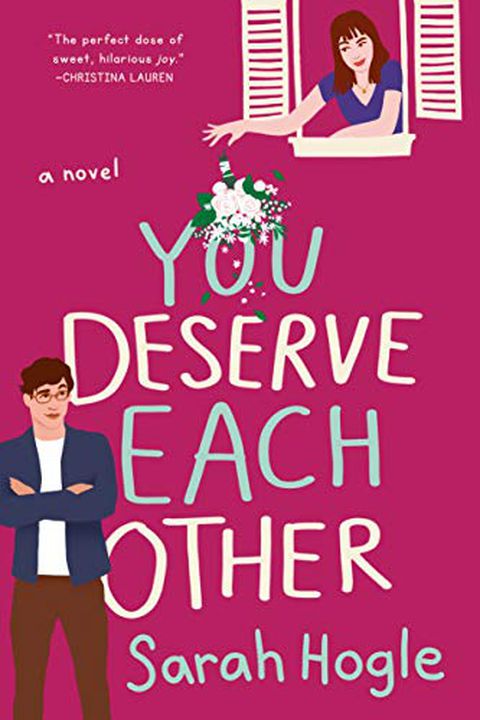
You Deserve Each Other
by Sarah Hogle
Reading Profile
Should I read this?
You Deserve Each Other (Sarah Hogle) is a lover-to-enemies-to-lovers rom-com with constant friction, sarcasm, and payoff that comes from two people both wanting the “right” thing for the relationship while resenting each other’s history. What works best is the humor and the escalating interpersonal chaos that keeps the romance moving. The main limitation is that the premise leans into petty grudge energy and complicated feelings; if you prefer softer, more straightforward emotional processing, the constant nastiness can grate.
Read this if...
- •Naomi Westfield–type reader: you want a rom-com where the “nice in public” version of the lead is basically a performance, and you’re here for the humor to underline how the apology attempts keep going wrong first.
- •A corporate analyst who’s spent Friday night doomscrolling and wants a short, fast read between shifts: you like banter that escalates into conflict, and you’ll enjoy the workplace/co-worker vibe as a backdrop for remembered details and public face-saving.
- •Someone planning a low-stakes weekend read in a crowded house: you want a relationship plot that stays in spark-and-retaliation mode (snark, schemes, blowups) more than long internal reflection, so it’s easy to pick up and finish across multiple sittings.
Skip this if...
- •You’ll likely put it down when the comedy starts to feel like mean-spirited grudge maintenance rather than romantic tension you can laugh with.
- •Skip it if you strongly prefer smooth communication and emotional maturity over messy misunderstandings and conflict-by-design.
- •You may lose interest if you want fewer setup constraints and more open-ended character growth; the premise locks you into the fiancé/nemesis twist, which can feel repetitive if you’ve seen many versions of this trope.
When your nemesis also happens to be your fiancé, happily ever after becomes a lot more complicated in this wickedly funny, loverstoenemiestolovers romantic comedy debut.Naomi Westfield has the perfect fiancé: Nicholas Rose holds doors open for her, remembers her restaurant orders, and comes from the kind of upstanding society family any bride ...
Before You Buy
Reading Specifications
Difficulty:easy
Audience Fit
- Naomi Westfield–type reader: you want a rom-com where the “nice in public” version of the lead is basically a performance, and you’re here for the humor to underline how the apology attempts keep going wrong first.
- A corporate analyst who’s spent Friday night doomscrolling and wants a short, fast read between shifts: you like banter that escalates into conflict, and you’ll enjoy the workplace/co-worker vibe as a backdrop for remembered details and public face-saving.
- Someone planning a low-stakes weekend read in a crowded house: you want a relationship plot that stays in spark-and-retaliation mode (snark, schemes, blowups) more than long internal reflection, so it’s easy to pick up and finish across multiple sittings.
- You’ll likely put it down when the comedy starts to feel like mean-spirited grudge maintenance rather than romantic tension you can laugh with.
- Skip it if you strongly prefer smooth communication and emotional maturity over messy misunderstandings and conflict-by-design.
- You may lose interest if you want fewer setup constraints and more open-ended character growth; the premise locks you into the fiancé/nemesis twist, which can feel repetitive if you’ve seen many versions of this trope.
Check formats, pricing, and availability options for Kindle, physical print, or audiobooks directly.
View available editions on AmazonKey themes
Why recommended
appears in Enemies to Lovers Romance, Romance, and Fiction.
Recommendation Signals
Recommendation proof is sourced from public posts, interviews, reading lists, and cited references.
No verified recommendation proof available yet.
Appears In

Not sure if this is the right fit?
Consider Norwegian Wood by Haruki Murakami. Recommended by 7 sources.
“Murakami's prose inhabits Toru’s quiet, inward voice, moving through campus rooms and memory with spare, melancholic detail. The most useful part is how small domestic moments and steady first-person narration make loneliness and mourning feel tactile and slow-burning. The main limitation is repetition: long stretches of interior monologue and muted melancholy can stagnate the middle, testing patience. Readers who want plot momentum or emotional variety will find the tone indulgent, while those receptive to lingering mood will be rewarded.”
Similar books
How recommendation signals are reviewed
Each recommendation is collected from a public source — interviews, articles, or curated lists — and linked to its original URL. Books with many verifiable recommendations from respected people rank higher.