
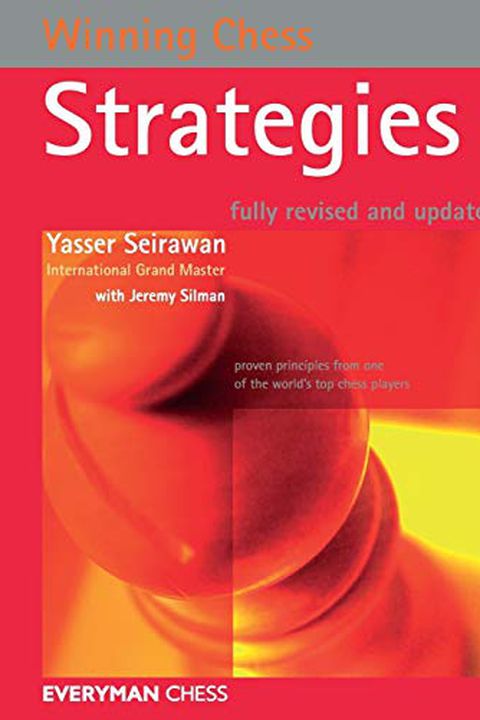
Winning Chess Strategies
by Yasser Seirawan
Amazon availability
Reading Profile
Should I read this?
Instructional and idea-focused, Winning Chess Strategies lays out clear rules for piece placement, converting small advantages, and building longer plans instead of chasing tactics. The most useful passages pair short maxims with compact examples that clarify recurring positional errors. Limitations: it favors conceptual explanation over repetitive puzzles or exhaustive, move-by-move game dissection, and some chapters circle back to the same maxims. Best used as a companion to practical training rather than a substitute for tactical exercise.
Read this if...
- •club player competing in weekend tournaments who keeps losing simplified positions — useful now because it emphasizes turning small edges into practical plans rather than memorizing openings
- •chess coach designing a compact curriculum for intermediate pupils who need teachable heuristics — handy when you want clear talking points and short examples to explain planning
- •adult learner who studies between games with limited time and prefers digestible idea-focused chapters — good when you want conceptual takeaways you can read in an evening
Skip this if...
- •you'll likely put it down when you came for hands-on training: if you expected tactical drills, lots of puzzles, or long annotated marathon games, this leans toward conceptual explanations
- •annoying if you prefer move-by-move calculation guides: readers who want stepwise calculation templates or exhaustive variations will find the prose more principle-driven than procedural
- •lose interest if you dislike repetition: the text revisits the same strategic maxims several times, which can feel redundant for advanced players seeking fresh material each chapter
A complete overview of proven chess principles that teaches readers how to deploy their pieces using the right moves at the right time to build small advantages into effective, longrange strategies....
Before You Buy
Reading Specifications
Difficulty:hard
Audience Fit
- club player competing in weekend tournaments who keeps losing simplified positions — useful now because it emphasizes turning small edges into practical plans rather than memorizing openings
- chess coach designing a compact curriculum for intermediate pupils who need teachable heuristics — handy when you want clear talking points and short examples to explain planning
- adult learner who studies between games with limited time and prefers digestible idea-focused chapters — good when you want conceptual takeaways you can read in an evening
- you'll likely put it down when you came for hands-on training: if you expected tactical drills, lots of puzzles, or long annotated marathon games, this leans toward conceptual explanations
- annoying if you prefer move-by-move calculation guides: readers who want stepwise calculation templates or exhaustive variations will find the prose more principle-driven than procedural
- lose interest if you dislike repetition: the text revisits the same strategic maxims several times, which can feel redundant for advanced players seeking fresh material each chapter
Check formats, pricing, and availability options for Kindle, physical print, or audiobooks directly.
View available editions on AmazonKey themes
Why recommended
appears in Chess and Nonfiction.
Recommendation Signals
Recommendation proof is sourced from public posts, interviews, reading lists, and cited references.
No verified recommendation proof available yet.
Ready to read Winning Chess Strategies?
Check formats, pricing, and availability options directly on Amazon.
Appears In
Not sure if this is the right fit?
Consider Accidental Presidents by Jared Cohen. Recommended by 10 sources.
“Accidental Presidents offers eight narrative portraits of men who succeeded to the U.S. presidency without election, using anecdote-rich scenes and readable context to show how personality and circumstance interact with office power. It’s strongest as a set of self-contained stories that make succession stakes concrete for non-specialist readers; it does not prioritize dense archival argument or exhaustive methodology, so expect some interpretive generalizations and repeated themes across cases. Use it for fast historical orientation rather than scholarly deep-dives.”
Similar books

How recommendation signals are reviewed
Each recommendation is collected from a public source — interviews, articles, or curated lists — and linked to its original URL. Books with many verifiable recommendations from respected people rank higher.