
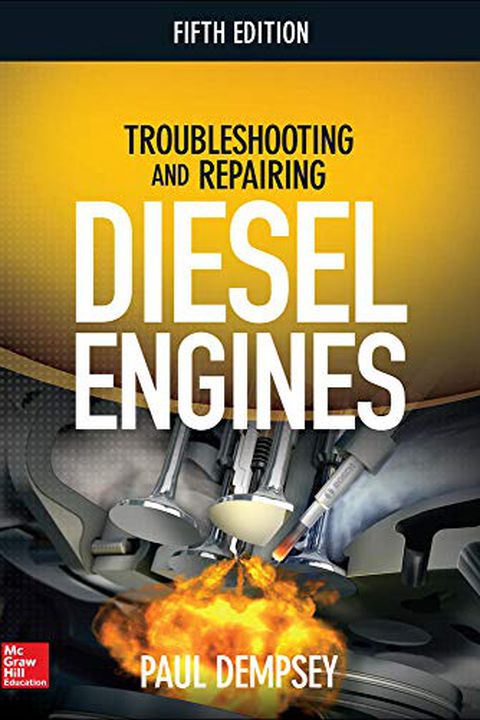
Troubleshooting and Repairing Diesel Engines, 5th Edition
by Paul Dempsey
Reading Profile
Should I read this?
Troubleshooting and Repairing Diesel Engines, 5th Edition reads like a practical shop manual: focused on symptoms, diagnostic checks, and stepwise repairs. The strongest value is concrete, actionable procedures meant to shorten repair time and reduce guesswork during hands‑on work. The tone is utilitarian and dense, which helps when you're following a repair but can feel repetitive if you prefer conceptual explanation or broader theory. Best used in short consults at the bench rather than read straight through.
Read this if...
- •fleet technician responsible for aging service trucks who needs quick, repeatable procedures to diagnose recurring engine faults—because the book supplies step‑by‑step fixes aimed at workshop efficiency.
- •owner‑operator restoring an older diesel pickup who wants to tackle common repairs themselves and cut shop bills—because clear mechanical instructions make hands‑on jobs more approachable.
- •small repair shop manager training an apprentice who needs concrete sequences and practical tips—because the manual provides procedural detail useful for on‑the‑job teaching.
Skip this if...
- •readers wanting a high‑level primer on diesel combustion and engine theory—annoying if you prefer conceptual overviews instead of procedural how‑tos.
- •anyone focused primarily on modern electronic engine‑control diagnostics and ECU software tuning—you'll likely put it down when chapters stay on mechanical repair detail and don’t cover advanced electronic diagnostics.
- •casual readers who want a breezy narrative or anecdotes—this is technical and can feel dry or repetitive if you’re not solving real maintenance problems.
Publisher's Note: Products purchased from Third Party sellers are not guaranteed by the publisher for quality, authenticity, or access to any online entitlements included with the product. Solve Diesel Engine Problems Quickly and Easily Using the Latest MethodsThis handson guide shows, step by step, how to save time and money by learning to identi...
Before You Buy
Reading Specifications
Difficulty:hard
Audience Fit
- fleet technician responsible for aging service trucks who needs quick, repeatable procedures to diagnose recurring engine faults—because the book supplies step‑by‑step fixes aimed at workshop efficiency.
- owner‑operator restoring an older diesel pickup who wants to tackle common repairs themselves and cut shop bills—because clear mechanical instructions make hands‑on jobs more approachable.
- small repair shop manager training an apprentice who needs concrete sequences and practical tips—because the manual provides procedural detail useful for on‑the‑job teaching.
- readers wanting a high‑level primer on diesel combustion and engine theory—annoying if you prefer conceptual overviews instead of procedural how‑tos.
- anyone focused primarily on modern electronic engine‑control diagnostics and ECU software tuning—you'll likely put it down when chapters stay on mechanical repair detail and don’t cover advanced electronic diagnostics.
- casual readers who want a breezy narrative or anecdotes—this is technical and can feel dry or repetitive if you’re not solving real maintenance problems.
Check formats, pricing, and availability options for Kindle, physical print, or audiobooks directly.
View available editions on AmazonKey themes
Why recommended
appears in Car Mechanics.
Recommendation Signals
Recommendation proof is sourced from public posts, interviews, reading lists, and cited references.
No verified recommendation proof available yet.
Appears In
Not sure if this is the right fit?
Consider Car Hacks & Mods for Dummies by David Vespremi.
Similar books
Car Hacks & Mods For Dummies
David Vespremi
Advanced Automotive Fault Diagnosis
Tom Denton
Cool Cars
Quentin Willson
Auto Repair For Dummies
Deanna Sclar
Classroom Manual for Hadfield's Today's Technician
Chris HadfieldHow to Diagnose and Repair Automotive Electrical Systems
Tracy MartinToday's Technician
Mark SchnubelAutomotive Chassis Systems
Halderman James D.How recommendation signals are reviewed
Each recommendation is collected from a public source — interviews, articles, or curated lists — and linked to its original URL. Books with many verifiable recommendations from respected people rank higher.