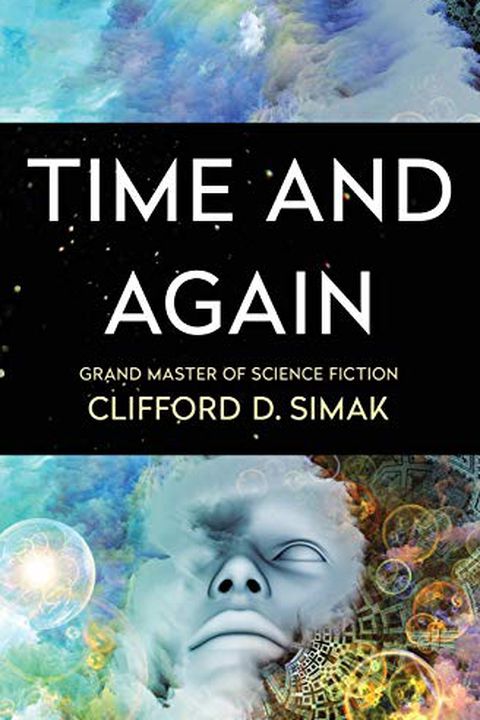
by Clifford D. Simak
Time and Again delivers a slow, contemplative SF return-home narrative with clear, spare prose and an emphasis on mood over mechanics. Its useful part is the unsettling premise—an astronaut back on Earth as something not fully human—that turns scenes of domestic life and memory into probes of identity and belonging. The main limitation is episodic pacing and repeated philosophical asides; readers who prefer fast plot, hard technological detail, or tight narrative drive will find long stretches that prioritize atmosphere over momentum.
This summary and audience guidance are AI-generated from the book's description and its recommendation history, last updated May 2026. Recommendations, quotes and sources elsewhere on this page come from published material and are not generated.
After two decades in space, a man returns to Earth as something new and not completely human, in this "enormously inventive" novel by a Nebula Award winner (Galaxy Science Fiction). Twenty years ago, Asher Sutton vanished somewhere in the star system 61 Cygni, an inaccessible corner of the universe that humankind has thus far been unable to explore...
Difficulty:hard
Check formats, pricing, and availability options for Kindle, physical print, or audiobooks directly.
View available editions on AmazonWhy recommended
appears in Time Travel, Science Fiction, and Science.
Recommendation proof is sourced from public posts, interviews, reading lists, and cited references.
No verified recommendation proof available yet.
Check formats, pricing, and availability options directly on Amazon.
Consider The Republic by Plato. Recommended by 13 sources.
“Plato stages an extended Socratic conversation that moves from concrete questions about justice into broad proposals about an ideal city, the structure of the soul, and what counts as reality and knowledge. Reading alternates brisk question-and-answer snippets with long, cumulative demonstrations that reward careful attention and annotation. Main value: a wealth of thought experiments for testing political and ethical intuitions. Main limitation: repetitive refutations, long policy sketches and dense metaphysical passages can feel abstruse and slow; patience and some philosophical background help.”
Each recommendation is collected from a public source — interviews, articles, or curated lists — and linked to its original URL. Books with many verifiable recommendations from respected people rank higher.