
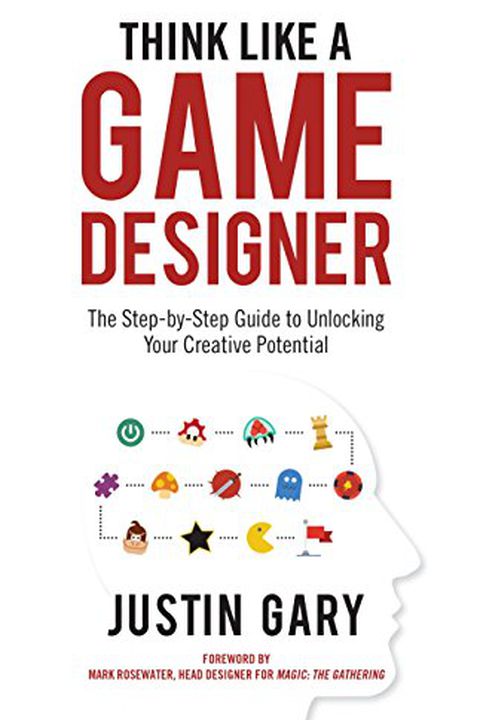
Think Like a Game Designer
The StepbyStep Guide to Unlocking Your Creative Potential
by Justin Gary
Amazon availability
Reading Profile
Should I read this?
Think Like a Game Designer reads like a veteran designer handing over shop notes: practical playtest techniques, concrete balancing heuristics, and detailed decisions about components and production. The most useful sections give tactics you can try in early prototypes and warnings about manufacturing limitations. Expect a steady stream of insider anecdotes and studio postmortems that sometimes restate the same lessons. If you want tidy principles or classroom-style structure, this is more illustrative and experience-driven than textbook-like.
Read this if...
- •A hobbyist card-game designer building a first playable prototype who needs concrete balancing tips and repeatable playtest moves to iterate between sessions.
- •An indie tabletop publisher planning a small print run who must choose components, packaging, and manufacturers and wants veteran warnings about cost-quality tradeoffs before ordering.
- •A game-design student supplementing coursework who wants real-world postmortems to contrast classroom theory with how production and shipping decisions actually play out.
Skip this if...
- •You'll likely put it down when chapters turn into long, insider postmortems and manufacturing detail — tedious if you expected concise, principle-first instruction.
- •Annoying if you prefer formal pedagogy, step-by-step checklists, or tightly structured lessons — the book reads like practitioner notes and anecdotes rather than a rigid curriculum.
- •Skip it if you design only video games with engine, networking, or live-service constraints; much of the advice centers on tabletop and physical-publishing tradeoffs and won’t map cleanly to software production.
Do you love gaming Do you have ideas for gamesof your own and want to learn how to produce themprofessionallyLongtime game designer Justin Gary has the answersyou seek. After twenty years in the gaming industry,creating such games as Solforge, Ascension, and theWorld of Warcraft Miniatures Game, Justin is nowsharing all his secrets in Think Like ...
Before You Buy
Reading Specifications
Difficulty:hard
Audience Fit
- A hobbyist card-game designer building a first playable prototype who needs concrete balancing tips and repeatable playtest moves to iterate between sessions.
- An indie tabletop publisher planning a small print run who must choose components, packaging, and manufacturers and wants veteran warnings about cost-quality tradeoffs before ordering.
- A game-design student supplementing coursework who wants real-world postmortems to contrast classroom theory with how production and shipping decisions actually play out.
- You'll likely put it down when chapters turn into long, insider postmortems and manufacturing detail — tedious if you expected concise, principle-first instruction.
- Annoying if you prefer formal pedagogy, step-by-step checklists, or tightly structured lessons — the book reads like practitioner notes and anecdotes rather than a rigid curriculum.
- Skip it if you design only video games with engine, networking, or live-service constraints; much of the advice centers on tabletop and physical-publishing tradeoffs and won’t map cleanly to software production.
Check formats, pricing, and availability options for Kindle, physical print, or audiobooks directly.
View available editions on AmazonKey themes
Why recommended
appears in Game Design and Nonfiction.
Recommendation Signals
Recommendation proof is sourced from public posts, interviews, reading lists, and cited references.
No verified recommendation proof available yet.
Ready to read Think Like a Game Designer?
Check formats, pricing, and availability options directly on Amazon.
Appears In
Not sure if this is the right fit?
Consider Accidental Presidents by Jared Cohen. Recommended by 10 sources.
“Accidental Presidents offers eight narrative portraits of men who succeeded to the U.S. presidency without election, using anecdote-rich scenes and readable context to show how personality and circumstance interact with office power. It’s strongest as a set of self-contained stories that make succession stakes concrete for non-specialist readers; it does not prioritize dense archival argument or exhaustive methodology, so expect some interpretive generalizations and repeated themes across cases. Use it for fast historical orientation rather than scholarly deep-dives.”
Similar books


How recommendation signals are reviewed
Each recommendation is collected from a public source — interviews, articles, or curated lists — and linked to its original URL. Books with many verifiable recommendations from respected people rank higher.