Recommended by 3 notable people, including Cleo Abram and Neil Gaiman
Check price on AmazonProof-backed recommendation
Amazon availability
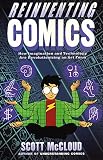
See customer reviews on Amazon →Reinventing Comics reads like a long illustrated manifesto: McCloud lays out a set of bold, format-focused proposals for how comics are made, distributed, and read. The book’s useful part is its imaginative, image-forward reasoning—arguments appear as comics rather than dry paragraphs, which makes abstract points immediate. Its main limitation is a tendency toward wide-ranging speculation and repetition: some chapters feel like extended thought experiments rather than concrete instructions, so expect provocative ideas rather than step-by-step techniques.
This summary and audience guidance are AI-generated from the book's description and its recommendation history, last updated June 2026. Recommendations, quotes and sources elsewhere on this page come from published material and are not generated.
In 1993, Scott McCloud tore down the wall between high and low culture with the acclaimed international hit Understanding Comics, a massive comic book that explored the inner workings of the worlds most misunderstood art form. Now, McCloud takes comics to the next level, charting twelve different revolutions in how comics are created, read, and pre...
Difficulty:hard
Check formats, pricing, and availability options for Kindle, physical print, or audiobooks directly.
View available editions on AmazonWhy recommended
Recommended by 3 sources and appears in Comics, Art, and Nonfiction.
People and public figures who have recommended this book.
Recommendation proof is sourced from public posts, interviews, reading lists, and cited references.
Check formats, pricing, and availability options directly on Amazon.
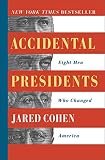
Consider Accidental Presidents by Jared Cohen. Recommended by 10 sources.
“Accidental Presidents offers eight narrative portraits of men who succeeded to the U.S. presidency without election, using anecdote-rich scenes and readable context to show how personality and circumstance interact with office power. It’s strongest as a set of self-contained stories that make succession stakes concrete for non-specialist readers; it does not prioritize dense archival argument or exhaustive methodology, so expect some interpretive generalizations and repeated themes across cases. Use it for fast historical orientation rather than scholarly deep-dives.”

Each recommendation is collected from a public source — interviews, articles, or curated lists — and linked to its original URL. Books with many verifiable recommendations from respected people rank higher.