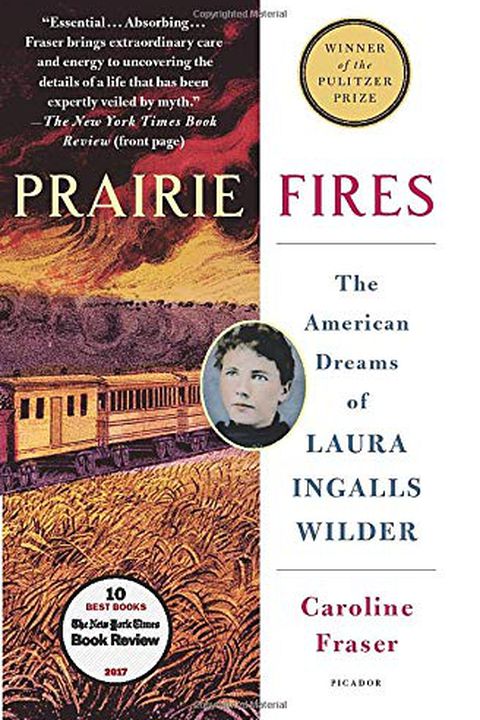
by Caroline Fraser
Recommended by Anne Thériault and Sarah Taber
Check price on AmazonRecommended by public sources
Amazon availability
Caroline Fraser leans on letters, diaries and land records to retell Laura Ingalls Wilder’s life, mixing vivid frontier scenes with extended documentary passages. The narrative's strengths lie in restoring detail and context to episodes fans may remember from Little House. Those same documentary deep dives — property disputes, publishing-business threads and legal minutiae — slow momentum and can feel dry. Best for readers willing to trade nostalgia for corrective detail; less fun for anyone seeking a short, sentimental reread.
This summary and audience guidance are AI-generated from the book's description and its recommendation history, last updated May 2026. Recommendations, quotes and sources elsewhere on this page come from published material and are not generated.
Millions of readers of Little House on the Prairie believe they know Laura Ingalls?the pioneer girl who survived blizzards and nearstarvation on the Great Plains, and the woman who wrote the famous autobiographical books. But the true saga of her life has never been fully told. Now, drawing on unpublished manuscripts, letters, diaries, and land an...
Difficulty:hard
Check formats, pricing, and availability options for Kindle, physical print, or audiobooks directly.
View available editions on AmazonWhy recommended
Recommended by 2 sources and appears in Biographies, History, and Nonfiction.
People and public figures who have recommended this book.
Recommendation proof is sourced from public posts, interviews, reading lists, and cited references.
Check formats, pricing, and availability options directly on Amazon.
Consider Accidental Presidents by Jared Cohen. Recommended by 10 sources.
“Accidental Presidents offers eight narrative portraits of men who succeeded to the U.S. presidency without election, using anecdote-rich scenes and readable context to show how personality and circumstance interact with office power. It’s strongest as a set of self-contained stories that make succession stakes concrete for non-specialist readers; it does not prioritize dense archival argument or exhaustive methodology, so expect some interpretive generalizations and repeated themes across cases. Use it for fast historical orientation rather than scholarly deep-dives.”

Each recommendation is collected from a public source — interviews, articles, or curated lists — and linked to its original URL. Books with many verifiable recommendations from respected people rank higher.