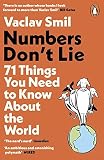
71 Things You Need to Know About the World
by Vaclav Smil


More Recommenders
“The French drank an impressive amount of wine in 1926, but their consumption is now a third of what it was back then. Why I love how this book forces you to think about the story behind a seemingly niche statistic.”
Source →Recommended by 3 notable people, including Bill Gates and Mark Zuckerberg
Check price on AmazonProof-backed recommendation
Amazon availability
See customer reviews on Amazon →Vaclav Smil tackles a variety of curiosity-driven questions with short, number-first essays that aim to make scale feel concrete. You’ll get many compact quantitative comparisons — airline safety, livestock mass, happiness measures — presented without heavy storytelling. what works best is clearer mental anchors for big, often abstract quantities; the limiting side is a tendency toward dry, enumerative prose and few methodological explanations or hands-on exercises. Readers seeking narrative or step-by-step data training are likely to feel shortchanged.
This summary and audience guidance are AI-generated from the book's description and its recommendation history, last updated June 2026. Recommendations, quotes and sources elsewhere on this page come from published material and are not generated.
My favourite author has done it again. Numbers Don't Lie is by far his most accessible book to date, and I highly recommend it to anyone who is curious about the world. I unabashedly recommend this book to anyone who loves learning' Bill GatesIs flying dangerous How much do the world's cows weigh And what makes people happy From Earth's nations...
Difficulty:hard
Check formats, pricing, and availability options for Kindle, physical print, or audiobooks directly.
View available editions on AmazonWhy recommended
Recommended by 3 sources.
People and public figures who have recommended this book.
Recommendation proof is sourced from public posts, interviews, reading lists, and cited references.
Bill Gates
Co-founder of Microsoft; co-chair of the Gates Foundation
“The French drank an impressive amount of wine in 1926, but their consumption is now a third of what it was back then. Why I love how this book forces you to think about the story behind a seemingly niche statistic.”
Check formats, pricing, and availability options directly on Amazon.
Each recommendation is collected from a public source — interviews, articles, or curated lists — and linked to its original URL. Books with many verifiable recommendations from respected people rank higher.