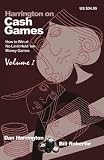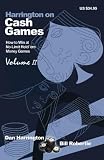
How to Play NoLimit Hold 'em Cash Games
by Dan Harrington
Dense, methodical and example-heavy, Harrington on Cash Games, Volume II walks through turn and river play with hand-by-hand breakdowns and clear attention to practical decision points. The most useful material is the stepwise reasoning on multi-street decisions and when to shift between value-betting and pot control. The main limitation is repetition and technical depth: long analytical passages and repeated examples can feel dry, and the book expects patience and some prior cash-game experience.
This summary and audience guidance are AI-generated from the book's description and its recommendation history, last updated June 2026. Recommendations, quotes and sources elsewhere on this page come from published material and are not generated.
The first years of the poker boom were fueled by the interest in nolimit hold 'em tournaments. Recently, however, players have been gravitating to another, even more complex form of hold 'em nolimit cash games. Harrington on Cash Games: Volume II continues where Volume I left off. In sections on turn and river play, Harrington explains why thes...
Difficulty:hard
Check formats, pricing, and availability options for Kindle, physical print, or audiobooks directly.
View available editions on AmazonRecommendation proof is sourced from public posts, interviews, reading lists, and cited references.
No verified recommendation proof available yet.
Check formats, pricing, and availability options directly on Amazon.
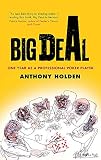
Consider Big Deal by Anthony Holden. Recommended by 2 sources.
“Reading this feels like shadowing a curious travel writer who has wandered into a closed-off subculture. Holden spends a year embedded with professional poker players across Las Vegas, Malta, Morocco and at sea, narrating hands, personalities, and barroom repartee while folding in moments of self-reflection. What works best is lively, anecdotal immersion — scenes of stakes, banter, and travel that bring the game to life. The main limitation is repetition and jargon: narrative momentum stalls when similar stories and name-dropping pile up, and it offers little in the way of practical poker instruction.”
Each recommendation is collected from a public source — interviews, articles, or curated lists — and linked to its original URL. Books with many verifiable recommendations from respected people rank higher.