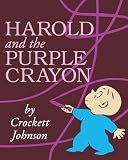
by Crockett Johnson
Recommended by Bethanne Patrick
Check price on AmazonProof-backed recommendation
Amazon availability
Reading Harold and the Purple Crayon feels like being handed a single continuous doodle: spare sentences and simple line drawings carry the whole story. What works best is its invitation to imagine and to use drawing as a narrative device—perfect for quiet bedtime reading or a prompt during art play. The main limitation is its minimalism: adults seeking plot complexity, character growth, or explicit lessons will find the pages thin, and repeated pictorial beats can feel repetitive on adult rereads.
This summary and audience guidance are AI-generated from the book's description and its recommendation history, last updated June 2026. Recommendations, quotes and sources elsewhere on this page come from published material and are not generated.
"One night, after thinking it over for some time, Harold decided to go for a walk in the moonlight." So begins this gentle story that shows just how far your imagination can take you. Armed only with an oversized purple crayon, young Harold draws himself a landscape full of beauty and excitement. But this is no harebrained, impulsive flight of fan...
Difficulty:easy
Check formats, pricing, and availability options for Kindle, physical print, or audiobooks directly.
View available editions on AmazonWhy recommended
Recommended by 1 source and appears in Childrens, Art, and Children’s Fiction.
People and public figures who have recommended this book.
Recommendation proof is sourced from public posts, interviews, reading lists, and cited references.
Bethanne Patrick
“Always and forever: HAROLD AND THE PURPLE CRAYON. Because I wanted to keep turning pages in that book. It made me hope I could one day get people to do that same. And yes, it took from age four to age ::mumblemumble”
Check formats, pricing, and availability options directly on Amazon.
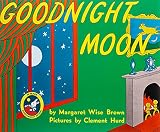
Consider Goodnight Moon by Margaret Wise Brown. Recommended by 10 sources.
“Quiet, spare text and soft, slow illustrations make this a finger-friendly, read-aloud bedtime choice; sentences are short and rhythmical, built around saying goodnight to objects. Its language is almost poem-like, designed for quiet repetition. Its chief value is predictability — the repetition becomes a soothing ritual that helps settle an energetic child. The main limitation is minimalism: adults looking for plot, variety, or interactive features will find the pages sparse, and some readers may think the repeated structure drags or feels dated.”
Each recommendation is collected from a public source — interviews, articles, or curated lists — and linked to its original URL. Books with many verifiable recommendations from respected people rank higher.