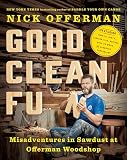
Misadventures in Sawdust at Offerman Woodshop
by Nick Offerman
Good Clean Fun reads like an affectionate tour of a one-man woodshop: project tales, backstage stories, and workshop philosophy delivered in Offerman’s blunt, deadpan voice. Its useful part is the steady celebration of manual craft—concrete descriptions of projects, tool talk, and the dignity of hands-on labor that make you want to visit a shop. Limitation: it’s not an instruction manual or deep cultural critique; punchlines and persona recur, so readers wanting tighter editing or new ideas throughout may find chapters repetitive.
This summary and audience guidance are AI-generated from the book's description and its recommendation history, last updated June 2026. Recommendations, quotes and sources elsewhere on this page come from published material and are not generated.
After two New York Times bestsellers, Nick Offerman returns with the subject for which he's known best?his incredible reallife woodshop.Nestled among the glitz and glitter of Tinseltown is a testament to American elbow grease and an honesttogod hard day?s work: Offerman Woodshop. Captained by hirsute woodworker, actor, comedian, and writer Nick ...
Difficulty:hard
Check formats, pricing, and availability options for Kindle, physical print, or audiobooks directly.
View available editions on AmazonWhy recommended
appears in Humor, Fiction, and Nonfiction.
Recommendation proof is sourced from public posts, interviews, reading lists, and cited references.
No verified recommendation proof available yet.
Check formats, pricing, and availability options directly on Amazon.
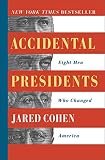
Consider Accidental Presidents by Jared Cohen. Recommended by 10 sources.
“Accidental Presidents offers eight narrative portraits of men who succeeded to the U.S. presidency without election, using anecdote-rich scenes and readable context to show how personality and circumstance interact with office power. It’s strongest as a set of self-contained stories that make succession stakes concrete for non-specialist readers; it does not prioritize dense archival argument or exhaustive methodology, so expect some interpretive generalizations and repeated themes across cases. Use it for fast historical orientation rather than scholarly deep-dives.”

Each recommendation is collected from a public source — interviews, articles, or curated lists — and linked to its original URL. Books with many verifiable recommendations from respected people rank higher.