
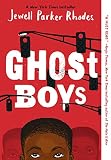
Ghost Boys
by Jewell Parker Rhodes
Reading Profile
Should I read this?
Ghost Boys opens with a sudden, wrenching loss and keeps the reader close to Jerome's point of view after he's killed; the voice is direct and aimed at younger teens but adults will feel its weight. The most useful part is its clear, emotional way of linking a single death to historical patterns, using a ghost perspective to make memory and consequence literal. Limitation: the prose and structure trade subtlety for straightforward moral urgency, so readers wanting ambiguity or long-form complexity may find it blunt.
Read this if...
- •middle-school ELA teacher prepping a week-long unit on race, empathy, or civic responsibility who needs an accessible, discussion-friendly text with short chapters and a clear emotional arc.
- •a teen (13–16) who has seen news about police violence and wants a story that acknowledges anger and grief while explaining historical echoes in straightforward language.
- •a YA book-club facilitator leading a mixed-age community group who wants a short title that sparks conversation about systemic injustice and memory—its ghost device gives a clear entry point for debate.
Skip this if...
- •you'll likely put it down when the emotional intensity and repeated testimony build into sustained grief; if you avoid depictions of a child's death or prolonged mourning, this will be too heavy.
- •annoying if you prefer ambiguity or layered narrative complexity—the book leans toward moral clarity and direct messaging rather than subtle, open-ended questions.
- •not a fit if you want experimental prose or long-form worldbuilding; the story is concise and focused on theme over stylistic play.
A heartbreaking and powerful story about a black boy killed by a police officer, drawing connections through history, from awardwinning author Jewell Parker Rhodes. Only the living can make the world better. Live and make it better. Twelveyearold Jerome is shot by a police officer who mistakes his toy gun for a real threat. As a ghost, he observ...
Before You Buy
Reading Specifications
Difficulty:hard
Audience Fit
- middle-school ELA teacher prepping a week-long unit on race, empathy, or civic responsibility who needs an accessible, discussion-friendly text with short chapters and a clear emotional arc.
- a teen (13–16) who has seen news about police violence and wants a story that acknowledges anger and grief while explaining historical echoes in straightforward language.
- a YA book-club facilitator leading a mixed-age community group who wants a short title that sparks conversation about systemic injustice and memory—its ghost device gives a clear entry point for debate.
- you'll likely put it down when the emotional intensity and repeated testimony build into sustained grief; if you avoid depictions of a child's death or prolonged mourning, this will be too heavy.
- annoying if you prefer ambiguity or layered narrative complexity—the book leans toward moral clarity and direct messaging rather than subtle, open-ended questions.
- not a fit if you want experimental prose or long-form worldbuilding; the story is concise and focused on theme over stylistic play.
Check formats, pricing, and availability options for Kindle, physical print, or audiobooks directly.
View available editions on AmazonKey themes
Why recommended
appears in Childrens and Fiction.
Recommendation Signals
Recommendation proof is sourced from public posts, interviews, reading lists, and cited references.
No verified recommendation proof available yet.
Appears In
Not sure if this is the right fit?
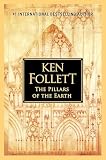
Consider The Pillars of the Earth by Ken Follett. Recommended by 5 sources.
“This sprawling, detail-rich historical novel follows cathedral builders, nobles, and townspeople across decades, delivering immersive scene-setting and a steady accumulation of plotlines. Its useful part is the sustained attention to craft—architecture, politics, rivalry—that makes the medieval world tangible. The main limitation is repetitive melodrama and swings in pacing: long, satisfying set pieces sit beside stretches that feel slow or contrived. Better read slowly rather than skimmed; readers who stick it out will find payoff in the concluding convergences.”
Similar books
How recommendation signals are reviewed
Each recommendation is collected from a public source — interviews, articles, or curated lists — and linked to its original URL. Books with many verifiable recommendations from respected people rank higher.