
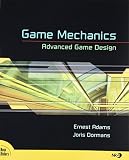
Game Mechanics
Advanced Game Design (Voices That Matter)
by Ernest Adams
Reading Profile
Should I read this?
Game Mechanics feels like a hands-on reference for designers who need to move from idea to tested systems: practical chapters on when to prototype, how to test, and ways to visualize or simulate gameplay so balance decisions are less guesswork. The book's useful part is its procedural advice and worked examples you can try on a live project; its main limitation is dense, diagram- and table-heavy sections that assume numerical comfort and can read as overly prescriptive.
Read this if...
- •indie game designer polishing a prototype who needs practical ways to simulate balance before playtests — useful because it gives concrete prototyping checkpoints and simulation techniques to try immediately.
- •mid-level designer at a small studio tasked with stabilizing core mechanics for a live update — useful because it emphasizes when to test and how to visualize interactions to reduce guesswork during iteration.
- •game-design student working on a capstone project who wants structured methods for building and tuning systems — useful because the book supplies stepwise practices and examples that translate into project milestones.
Skip this if...
- •you'll likely put it down when the text shifts into long, number-heavy examples, tables, or algorithm-like sections that demand slow, focused reading; that is the common drop-off point.
- •annoying if you prefer narrative case studies, high-level design essays, or anything light and breezy — this book leans technical and procedural rather than inspirational.
- •frustrating if you lack comfort with basic arithmetic or system diagrams, since many explanations use simulation output and balance math without handholding for complete novices.
This indepth resource teaches you to craft mechanics that generate challenging, enjoyable, and wellbalanced gameplay. You'll discover at what stages to prototype, test, and implement mechanics in games and learn how to visualize and simulate game mechanics in order to design better games. Along the way, you'll practice what you've learned with ha...
Before You Buy
Reading Specifications
Difficulty:hard
Audience Fit
- indie game designer polishing a prototype who needs practical ways to simulate balance before playtests — useful because it gives concrete prototyping checkpoints and simulation techniques to try immediately.
- mid-level designer at a small studio tasked with stabilizing core mechanics for a live update — useful because it emphasizes when to test and how to visualize interactions to reduce guesswork during iteration.
- game-design student working on a capstone project who wants structured methods for building and tuning systems — useful because the book supplies stepwise practices and examples that translate into project milestones.
- you'll likely put it down when the text shifts into long, number-heavy examples, tables, or algorithm-like sections that demand slow, focused reading; that is the common drop-off point.
- annoying if you prefer narrative case studies, high-level design essays, or anything light and breezy — this book leans technical and procedural rather than inspirational.
- frustrating if you lack comfort with basic arithmetic or system diagrams, since many explanations use simulation output and balance math without handholding for complete novices.
Check formats, pricing, and availability options for Kindle, physical print, or audiobooks directly.
View available editions on AmazonKey themes
Why recommended
appears in Game Design and Nonfiction.
Recommendation Signals
Recommendation proof is sourced from public posts, interviews, reading lists, and cited references.
No verified recommendation proof available yet.
Appears In
Not sure if this is the right fit?
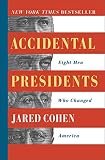
Consider Accidental Presidents by Jared Cohen. Recommended by 10 sources.
“Accidental Presidents offers eight narrative portraits of men who succeeded to the U.S. presidency without election, using anecdote-rich scenes and readable context to show how personality and circumstance interact with office power. It’s strongest as a set of self-contained stories that make succession stakes concrete for non-specialist readers; it does not prioritize dense archival argument or exhaustive methodology, so expect some interpretive generalizations and repeated themes across cases. Use it for fast historical orientation rather than scholarly deep-dives.”
Similar books


How recommendation signals are reviewed
Each recommendation is collected from a public source — interviews, articles, or curated lists — and linked to its original URL. Books with many verifiable recommendations from respected people rank higher.