Frida
(Spanish language edition)
by Jonah Winter
Reading Profile
Should I read this?
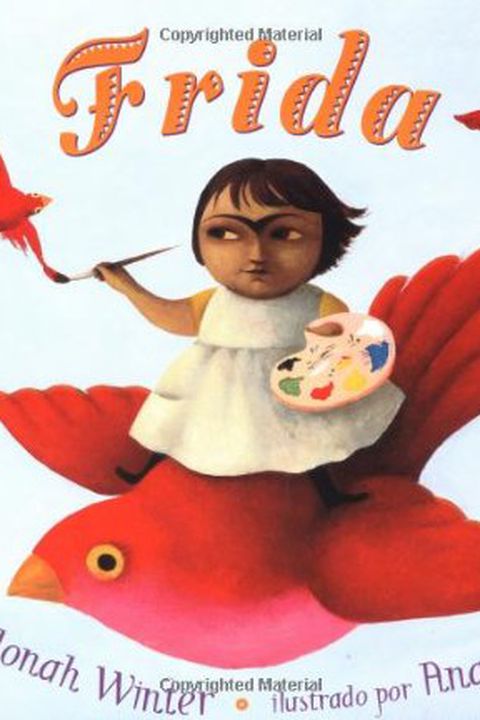
Jonah Winter’s Frida compresses formative episodes—childhood caregiving, months of illness, and a devastating bus accident—into spare, lyrical vignettes paired with bold imagery. It works best as a read-aloud or first encounter for young listeners: emotionally immediate, visually driven, and easy to return to. The main limitation is the book’s brevity and mood focus: key historical context and art analysis are largely absent, and adults hoping for lesson plans or deeper explanation will find it thin.
Read this if...
- •elementary art teacher preparing a single lesson on notable artists for 7–9 year-olds — useful as a short, image-forward intro that sparks class discussion about making art from experience.
- •parent of a bilingual 4–8 year-old looking for bedtime stories that introduce creative resilience — the book’s short lines and striking pictures fit read-alouds and repeat readings.
- •children’s librarian assembling a storytime about artists or identity — a compact Spanish-language title that opens conversation without requiring long preparation.
Skip this if...
- •readers hunting for detailed art history or a precise chronology — you'll likely put it down in the first third when the text prefers lyrical vignettes over dates, techniques, or clear sequence of events.
- •adults who came looking for classroom-ready materials or step-by-step lesson plans — frustratingly short on concrete activities and hands-on guidance, so you’ll lose patience if you need practical teaching content.
- •people who avoid somber themes or want a consistently upbeat picture book — the recurring illness and accident scenes are emotionally heavy and may feel too bleak if you expected light, purely cheerful stories.
Before You Buy
Reading Specifications
Difficulty:easy
Audience Fit
- elementary art teacher preparing a single lesson on notable artists for 7–9 year-olds — useful as a short, image-forward intro that sparks class discussion about making art from experience.
- parent of a bilingual 4–8 year-old looking for bedtime stories that introduce creative resilience — the book’s short lines and striking pictures fit read-alouds and repeat readings.
- children’s librarian assembling a storytime about artists or identity — a compact Spanish-language title that opens conversation without requiring long preparation.
- readers hunting for detailed art history or a precise chronology — you'll likely put it down in the first third when the text prefers lyrical vignettes over dates, techniques, or clear sequence of events.
- adults who came looking for classroom-ready materials or step-by-step lesson plans — frustratingly short on concrete activities and hands-on guidance, so you’ll lose patience if you need practical teaching content.
- people who avoid somber themes or want a consistently upbeat picture book — the recurring illness and accident scenes are emotionally heavy and may feel too bleak if you expected light, purely cheerful stories.
Check formats, pricing, and availability options for Kindle, physical print, or audiobooks directly.
View available editions on AmazonKey themes
Why recommended
appears in Art History, Art, and Fiction.
Recommendation Signals
Recommendation proof is sourced from public posts, interviews, reading lists, and cited references.
No verified recommendation proof available yet.
Appears In

Not sure if this is the right fit?
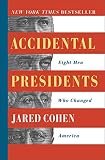
Consider Accidental Presidents by Jared Cohen. Recommended by 10 sources.
“Accidental Presidents offers eight narrative portraits of men who succeeded to the U.S. presidency without election, using anecdote-rich scenes and readable context to show how personality and circumstance interact with office power. It’s strongest as a set of self-contained stories that make succession stakes concrete for non-specialist readers; it does not prioritize dense archival argument or exhaustive methodology, so expect some interpretive generalizations and repeated themes across cases. Use it for fast historical orientation rather than scholarly deep-dives.”
Similar books
How recommendation signals are reviewed
Each recommendation is collected from a public source — interviews, articles, or curated lists — and linked to its original URL. Books with many verifiable recommendations from respected people rank higher.