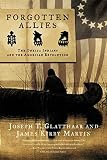
by Joseph T. Glatthaar
Glatthaar delivers a narrative-driven history that centers the Oneida Indians' role in the American Revolution, pairing battlefield episodes with cultural and political background. The most useful part is the foregrounding of Oneida decisions and sacrifices, which fills a common gap in standard Revolution narratives. The main limitation is an emphasis on narrative sweep and heroism that can gloss over broader Native diplomatic networks or comparative tribal experiences; readers seeking tight analytic argumentation or theoretical framing may find it uneven.
This summary and audience guidance are AI-generated from the book's description and its recommendation history, last updated June 2026. Recommendations, quotes and sources elsewhere on this page come from published material and are not generated.
Combining compelling narrative and grand historical sweep, Forgotten Allies offers a vivid account of the Oneida Indians, forgotten heroes of the American Revolution who risked their homeland, their culture, and their lives to join in a war that gave birth to a new nation at the expense of their own. Revealing for the first time the full sacrifice ...
Difficulty:hard
Check formats, pricing, and availability options for Kindle, physical print, or audiobooks directly.
View available editions on AmazonWhy recommended
appears in American History, History, and Nonfiction.
Recommendation proof is sourced from public posts, interviews, reading lists, and cited references.
No verified recommendation proof available yet.
Check formats, pricing, and availability options directly on Amazon.
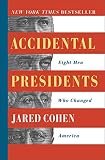
Consider Accidental Presidents by Jared Cohen. Recommended by 10 sources.
“Accidental Presidents offers eight narrative portraits of men who succeeded to the U.S. presidency without election, using anecdote-rich scenes and readable context to show how personality and circumstance interact with office power. It’s strongest as a set of self-contained stories that make succession stakes concrete for non-specialist readers; it does not prioritize dense archival argument or exhaustive methodology, so expect some interpretive generalizations and repeated themes across cases. Use it for fast historical orientation rather than scholarly deep-dives.”

Each recommendation is collected from a public source — interviews, articles, or curated lists — and linked to its original URL. Books with many verifiable recommendations from respected people rank higher.