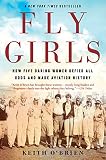
How Five Daring Women Defied All Odds and Made Aviation History
by Keith O'Brien
Racing through interwar airfields and headlines, this is a scene-driven narrative that collects vivid episodes about women pilots who dared to compete when public reaction ranged from ridicule to fascination. Its useful part is lively period color, race-day drama, and human risk — useful for getting into the sights, sounds, and stakes of air racing. Main limitation: it leans toward anecdote and reportage rather than sustained analysis, so readers wanting structural social history or explicit argument may feel shortchanged.
This summary and audience guidance are AI-generated from the book's description and its recommendation history, last updated June 2026. Recommendations, quotes and sources elsewhere on this page come from published material and are not generated.
A New York Times Bestseller An Amazon Best Book of the Year A New York Times Book Review Editors? Choice A Time Best Book for Summer Between the world wars, no sport was more popular, or more dangerous, than airplane racing. While male pilots were lauded as heroes, the few women who dared to fly were more often ridiculed?until a cadre of wo...
Difficulty:easy
Check formats, pricing, and availability options for Kindle, physical print, or audiobooks directly.
View available editions on AmazonWhy recommended
appears in History and Nonfiction.
Recommendation proof is sourced from public posts, interviews, reading lists, and cited references.
No verified recommendation proof available yet.
Check formats, pricing, and availability options directly on Amazon.
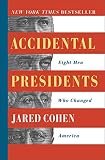
Consider Accidental Presidents by Jared Cohen. Recommended by 10 sources.
“Accidental Presidents offers eight narrative portraits of men who succeeded to the U.S. presidency without election, using anecdote-rich scenes and readable context to show how personality and circumstance interact with office power. It’s strongest as a set of self-contained stories that make succession stakes concrete for non-specialist readers; it does not prioritize dense archival argument or exhaustive methodology, so expect some interpretive generalizations and repeated themes across cases. Use it for fast historical orientation rather than scholarly deep-dives.”

Each recommendation is collected from a public source — interviews, articles, or curated lists — and linked to its original URL. Books with many verifiable recommendations from respected people rank higher.