
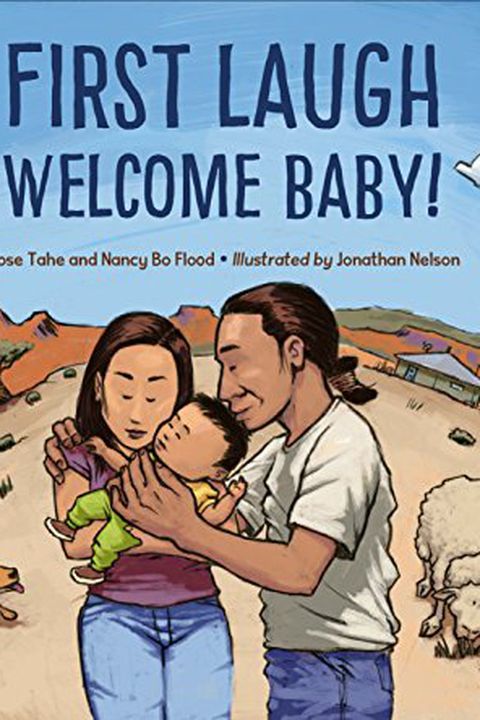
First LaughWelcome, Baby!
by Rose Ann Tahe
Reading Profile
Should I read this?
Reading it feels like a warm, short family story meant for lap-sit reads; simple sentences and repetitive invites make it ideal for aloud rhythm. The useful part is its focus on a specific Navajo celebration—the First Laugh Ceremony—offering families a short script to celebrate a baby's first laugh. Limiting aspects: text is brief and picture-focused, so grown readers wanting deep cultural background or extended narrative will find it thin, and older children may lose interest after the repetitive lines.
Read this if...
- •preschool teacher planning a multicultural storytime who needs a 5–10 minute read-aloud with clear roles and repetition to involve a group.
- •new parent or caregiver wanting a cheerful book to mark an infant milestone at home, because it offers a simple ceremony-style text to share with family.
- •children's librarian building a 'family rituals' shelf looking for a compact, shareable title that introduces one community's welcome practice in an easily re-readable format.
Skip this if...
- •readers seeking deep cultural history or explanatory context — text is short and lacks extended background or notes.
- •anyone who dislikes repetitive refrains or chant-like lines; you'll likely put it down when the same invite-to-laugh repeats and you want more plot or variety.
- •older children (grade-school and up) or adults wanting character development and narrative complexity — the story is picture-led and succinct, and it lacks hands-on exercises.
In Navajo families, the first person to make a new baby laugh hosts the child's First Laugh Ceremony. Who will earn the honor in this storyThe First Laugh Ceremony is a celebration held to welcome a new member of the community. As everyonefrom Baby's nima (mom) to nadi (big sister) to cheii (grandfather)tries to elicit the joyous sound from Ba...
Before You Buy
Reading Specifications
Difficulty:easy
Audience Fit
- preschool teacher planning a multicultural storytime who needs a 5–10 minute read-aloud with clear roles and repetition to involve a group.
- new parent or caregiver wanting a cheerful book to mark an infant milestone at home, because it offers a simple ceremony-style text to share with family.
- children's librarian building a 'family rituals' shelf looking for a compact, shareable title that introduces one community's welcome practice in an easily re-readable format.
- readers seeking deep cultural history or explanatory context — text is short and lacks extended background or notes.
- anyone who dislikes repetitive refrains or chant-like lines; you'll likely put it down when the same invite-to-laugh repeats and you want more plot or variety.
- older children (grade-school and up) or adults wanting character development and narrative complexity — the story is picture-led and succinct, and it lacks hands-on exercises.
Check formats, pricing, and availability options for Kindle, physical print, or audiobooks directly.
View available editions on AmazonKey themes
Why recommended
appears in Native American, Fiction, and Nonfiction.
Recommendation Signals
Recommendation proof is sourced from public posts, interviews, reading lists, and cited references.
No verified recommendation proof available yet.
Appears In
Not sure if this is the right fit?
Consider Accidental Presidents by Jared Cohen. Recommended by 10 sources.
“Accidental Presidents offers eight narrative portraits of men who succeeded to the U.S. presidency without election, using anecdote-rich scenes and readable context to show how personality and circumstance interact with office power. It’s strongest as a set of self-contained stories that make succession stakes concrete for non-specialist readers; it does not prioritize dense archival argument or exhaustive methodology, so expect some interpretive generalizations and repeated themes across cases. Use it for fast historical orientation rather than scholarly deep-dives.”
Similar books

How recommendation signals are reviewed
Each recommendation is collected from a public source — interviews, articles, or curated lists — and linked to its original URL. Books with many verifiable recommendations from respected people rank higher.