
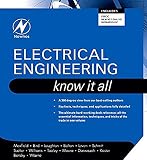
Electrical Engineering
Know It All (Newnes Know It All)
by Clive Maxfield
Reading Profile
Should I read this?
This is a dense, wide-ranging desk reference that reads like stitched-together chapters on circuits, signals, power, and practical design tips. It's most useful as a quick-lookup resource and a reminder of rules of thumb when you already know the basics; expect compact explanations, diagrams, and lots of factual detail. Limitation: it can feel uneven—some topics are terse, others long—and it doesn't handhold beginners or include hands-on exercises. Best used on the job or while studying for targeted problems rather than as a linear textbook.
Read this if...
- •embedded-systems engineer debugging a mixed-signal interface during a tight sprint who needs fast reminders on analog interfacing and practical tolerances
- •senior undergraduate EE student preparing for lab finals and wanting a rapid refresher of formulas, common component behaviors, and quick design checks
- •field-service electronics technician keeping a compact desk reference for common circuit diagnostics, power-supply fixes, and troubleshooting heuristics
Skip this if...
- •you'll likely put it down when you want step-by-step learning or guided tutorials—the text assumes background and jumps straight to facts and rules of thumb
- •annoying if you prefer full mathematical derivations or deep theoretical exposition rather than concise practical statements and worked examples
- •no exercises: lacks hands-on exercises and practice problems, so it won't help if you planned to learn by doing within the book
The Newnes Know It All Series takes the best of what our authors have written to create hardworking desk references that will be an engineer's first port of call for key information, design techniques and rules of thumb. Guaranteed not to gather dust on a shelf!Electrical engineers need to master a wide area of topics to excel. The Electrical Engi...
Before You Buy
Reading Specifications
Difficulty:hard
Audience Fit
- embedded-systems engineer debugging a mixed-signal interface during a tight sprint who needs fast reminders on analog interfacing and practical tolerances
- senior undergraduate EE student preparing for lab finals and wanting a rapid refresher of formulas, common component behaviors, and quick design checks
- field-service electronics technician keeping a compact desk reference for common circuit diagnostics, power-supply fixes, and troubleshooting heuristics
- you'll likely put it down when you want step-by-step learning or guided tutorials—the text assumes background and jumps straight to facts and rules of thumb
- annoying if you prefer full mathematical derivations or deep theoretical exposition rather than concise practical statements and worked examples
- no exercises: lacks hands-on exercises and practice problems, so it won't help if you planned to learn by doing within the book
Check formats, pricing, and availability options for Kindle, physical print, or audiobooks directly.
View available editions on AmazonKey themes
Why recommended
appears in Electrical Engineering.
Recommendation Signals
Recommendation proof is sourced from public posts, interviews, reading lists, and cited references.
No verified recommendation proof available yet.
Appears In
Not sure if this is the right fit?
Consider Power Electronics by P. S. Bimbhra.
Similar books
Power Electronics
P. S. Bimbhra
Delmar's Standard Textbook of Electricity
Stephen L. Herman
Study Guide for Fundamentals of EngineeringElectrical & Computer CBT Exam
Wasim Asghar Pe
DiscreteTime Signal Processing
Alan Oppenheim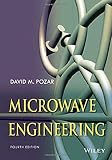
Microwave Engineering
David M. Pozar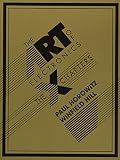
The Art of Electronics
Paul Horowitz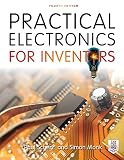
Practical Electronics for Inventors, Fourth Edition
Paul Scherz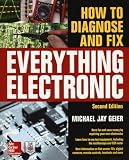
How to Diagnose and Fix Everything Electronic, Second Edition
Michael GeierHow recommendation signals are reviewed
Each recommendation is collected from a public source — interviews, articles, or curated lists — and linked to its original URL. Books with many verifiable recommendations from respected people rank higher.