The Story of an OutsidetheBox Kid and the Mom Who Loved Him
by Sally Clarkson
Different reads like a candid, faith-framed parenting memoir: intimate family scenes, blunt talk about Nathan’s creativity, learning struggles, anxiety and OCD, and a parent's refusal to treat him as merely a problem to fix. Useful as a model of patient, grace-centered response and as first-person examples you can quote when others label a child. Limiting if you expect secular, step-by-step strategies or research-grounded advice—the book leans on testimony and repeated lessons rather than technical detail.
This summary and audience guidance are AI-generated from the book's description and its recommendation history, last updated June 2026. Recommendations, quotes and sources elsewhere on this page come from published material and are not generated.
Nathan was different and Sally knew it.From his early childhood, Nathan was bursting with creativity and uncontainable energy, struggling not only with learning issues but also with anxiety and OCD. He saw the world through his own unique lensone that often caused him to be labeled as "bad," "troubled," or someone in need of "fixing."Bravely choo...
Difficulty:hard
Check formats, pricing, and availability options for Kindle, physical print, or audiobooks directly.
View available editions on AmazonWhy recommended
appears in Parenting, Relationships & Family, and Nonfiction.
Recommendation proof is sourced from public posts, interviews, reading lists, and cited references.
No verified recommendation proof available yet.
Check formats, pricing, and availability options directly on Amazon.
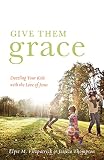
Consider Give Them Grace by Elyse M. Fitzpatrick.
“Reads like a pastoral primer that pushes parents to rethink 'being good' as a response to grace rather than a set of rules to earn approval. Strength lies in its clear theological language, scriptural examples, and concrete parenting scenarios that model gospel-centered responses. Limitation: sustained doctrinal argument and repeated proof-texting can become preachy and repetitive, and there are few step-by-step behavior strategies or secular psychological tools for parents who want practical how-tos.”
Each recommendation is collected from a public source — interviews, articles, or curated lists — and linked to its original URL. Books with many verifiable recommendations from respected people rank higher.