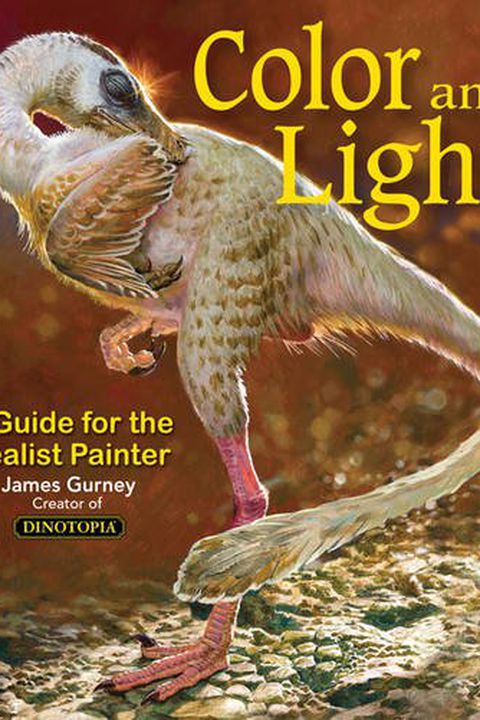
Color and Light
A Guide for the Realist Painter (Volume 2) (James Gurney Art)
by James Gurney
Reading Profile
Should I read this?
Color and Light feels like an extended studio lecture full of painted studies and photo comparisons that show how light alters temperature, value, and reflected color. The strongest part is the visual demonstrations that make specific choices about daylight, artificial light, and atmosphere tangible for representational painters. It can bog down in technical detail and repeated comparisons, which will slow readers seeking quick, procedural lessons. Best used as a slow study or a visual reference to consult while working, not a one-sitting primer.
Read this if...
- •oil or acrylic painter preparing a realistic landscape series who needs photo-to-paint demonstrations showing atmospheric light shifts and color adjustments while composing plein-air references.
- •illustration student working on imaginative realism who must render invented lighting for characters and environments and wants side-by-side studies to translate imagined light into believable color relationships.
- •art instructor designing a short module on color and temperature who wants illustrative plates and comparative examples to project and discuss in class rather than abstract jargon.
Skip this if...
- •you'll likely put it down when long, technical sections and dense photo-to-paint comparisons pile up; readers who want fast, stepwise exercises often lose patience at that point.
- •annoying if you prefer expressive or abstract color work — the emphasis leans toward observation and believable light rather than loose painterly theory.
- •not ideal if you want a beginner's hand-holding primer or lots of hands-on exercises; expect visual demonstrations and explanation rather than simplified, procedural drills.
From New York Times bestselling author of the Dinotopia series, James Gurney, comes a carefully crafted and researched study on color and light in paintings. This art instruction book will accompany the acclaimed Imaginative Realism: How to Paint What Doesn't Exist.James Gurney, New York Times bestselling author and artist of the Dinotopia series...
Before You Buy
Reading Specifications
Difficulty:hard
Audience Fit
- oil or acrylic painter preparing a realistic landscape series who needs photo-to-paint demonstrations showing atmospheric light shifts and color adjustments while composing plein-air references.
- illustration student working on imaginative realism who must render invented lighting for characters and environments and wants side-by-side studies to translate imagined light into believable color relationships.
- art instructor designing a short module on color and temperature who wants illustrative plates and comparative examples to project and discuss in class rather than abstract jargon.
- you'll likely put it down when long, technical sections and dense photo-to-paint comparisons pile up; readers who want fast, stepwise exercises often lose patience at that point.
- annoying if you prefer expressive or abstract color work — the emphasis leans toward observation and believable light rather than loose painterly theory.
- not ideal if you want a beginner's hand-holding primer or lots of hands-on exercises; expect visual demonstrations and explanation rather than simplified, procedural drills.
Check formats, pricing, and availability options for Kindle, physical print, or audiobooks directly.
View available editions on AmazonKey themes
Why recommended
appears in Painting, Color Theory, and Art.
Recommendation Signals
Recommendation proof is sourced from public posts, interviews, reading lists, and cited references.
No verified recommendation proof available yet.
Appears In

Not sure if this is the right fit?
Consider Bright Earth by Philip Ball.
Similar books

Bright Earth
Philip Ball
Making Color Sing, 25th Anniversary Edition
Jeanne Dobie
Color Lab for MixedMedia Artists (Lab Series)
Deborah Forman
Exploring Color Workshop, 30th Anniversary Edition
Nita Leland
Artist's Color Manual
Simon Jennings
Contemporary Color
Steven Bleicher
Color Design Workbook
Sean Adams
Color Choices
Stephen QuillerHow recommendation signals are reviewed
Each recommendation is collected from a public source — interviews, articles, or curated lists — and linked to its original URL. Books with many verifiable recommendations from respected people rank higher.