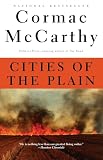
The Border Trilogy, Book 3
by Cormac McCarthy
Recommended by Devon Sawa
Check price on AmazonProof-backed recommendation
Amazon availability
Cities of the Plain reunites John Grady Cole and Billy Parham in a spare, often lyrical 1952 Southwest where everyday detail and sudden violence collide. Reading feels patient and atmospheric: long descriptive stretches, terse dialogue, and abrupt shocks shape the experience. Most useful for readers who value moral complexity, atmospheric setting, and sentence-level craft; limiting if you prefer momentum, frequent plot turns, or consoling endings—the novel can linger, circle its themes, and close on a somber note.
This summary and audience guidance are AI-generated from the book's description and its recommendation history, last updated June 2026. Recommendations, quotes and sources elsewhere on this page come from published material and are not generated.
In this final volume of The Border Trilogy, two men marked by the boyhood adventures of All the Pretty Horses and The Crossing now stand together, in the still point between their vivid pasts and uncertain futures, to confront a country changing or already changed beyond recognition.In the fall of 1952, John Grady Cole and Billy Parhamnine years ...
Difficulty:hard
Check formats, pricing, and availability options for Kindle, physical print, or audiobooks directly.
View available editions on AmazonWhy recommended
Recommended by 1 source.
People and public figures who have recommended this book.
Recommendation proof is sourced from public posts, interviews, reading lists, and cited references.
Devon Sawa
“I enjoyed it. But yes having kids makes it much more powerful, I think. If you want a really good book; My favorite is Cormick McCarthy‘s border series, starting with “all the pretty horses””
Check formats, pricing, and availability options directly on Amazon.
Each recommendation is collected from a public source — interviews, articles, or curated lists — and linked to its original URL. Books with many verifiable recommendations from respected people rank higher.