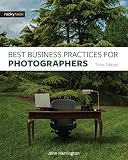
by John Harrington
Practical, down-to-earth manual that walks through essential business tasks—pricing, contracts, client workflows, and basic marketing—aimed at photographers setting up or professionalizing a studio. Its clearest value is step-by-step operational advice and sample approaches you can adapt immediately. Limitations: tone can be dry and occasionally checklist-heavy, repeating similar administrative points; it favors pragmatic procedure over long-form storytelling or conceptual marketing strategy. Best used as a reference you return to rather than a single narrative you read straight through.
This summary and audience guidance are AI-generated from the book's description and its recommendation history, last updated June 2026. Recommendations, quotes and sources elsewhere on this page come from published material and are not generated.
Best Business Practices for Photographers, 3rd Edition, is a complete and comprehensive guide for photographers starting, maintaining, and growing their business in order to achieve financial success and personal satisfaction. John Harrington covers all the key points of the business of professional photography, and he provides today's best practic...
Difficulty:hard
Check formats, pricing, and availability options for Kindle, physical print, or audiobooks directly.
View available editions on AmazonWhy recommended
appears in Photography, Photography, and Art.
Recommendation proof is sourced from public posts, interviews, reading lists, and cited references.
No verified recommendation proof available yet.
Check formats, pricing, and availability options directly on Amazon.
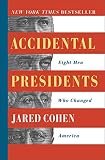
Consider Accidental Presidents by Jared Cohen. Recommended by 10 sources.
“Accidental Presidents offers eight narrative portraits of men who succeeded to the U.S. presidency without election, using anecdote-rich scenes and readable context to show how personality and circumstance interact with office power. It’s strongest as a set of self-contained stories that make succession stakes concrete for non-specialist readers; it does not prioritize dense archival argument or exhaustive methodology, so expect some interpretive generalizations and repeated themes across cases. Use it for fast historical orientation rather than scholarly deep-dives.”

Each recommendation is collected from a public source — interviews, articles, or curated lists — and linked to its original URL. Books with many verifiable recommendations from respected people rank higher.