BookMentionsBookMentions
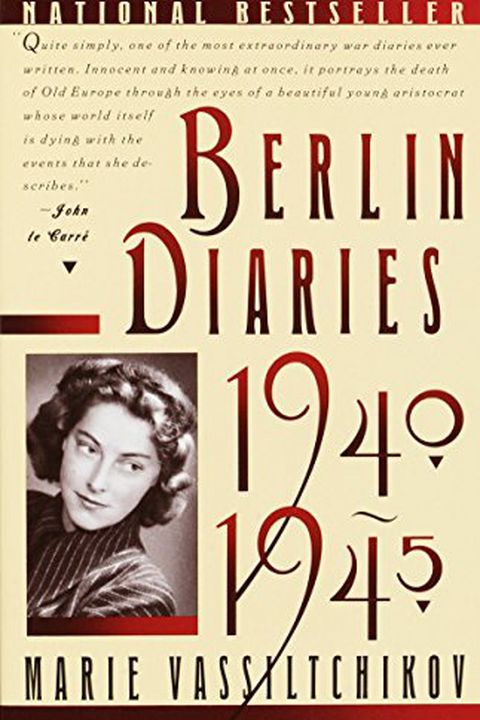
Berlin Diaries, 19401945

Berlin Diaries, 19401945

by Marie Vassiltchikov

Check price on Amazon

Proof-backed recommendation

Amazon availability

Reading Profile

Difficulty:hard
Themes:intimacy vs surveillancebureaucracy vs personal conscience

Should I read this?

Reading Berlin Diaries, 1940–1945 feels like following a private notebook kept inside a functioning foreign office and later on hospital wards: intimate, observational, and specific to one young woman's daily reality. Its useful part is the granular, day-to-day portrait of social life, bureaucratic settings, and the small moral choices that punctuated wartime Berlin. Its limitation is uneven context and occasional repetition: personal entries assume the reader knows surrounding events and sometimes linger over domestic detail while skimming wider political explanation.

Read this if...

  • a PhD candidate writing a chapter on civilian routines in wartime Berlin who needs contemporaneous, quotable scene-level detail for close textual analysis; the diary supplies short, primary-source passages ready to annotate for argument drafts due this semester
  • a museum educator preparing labels and audio-guide text for an upcoming exhibit on daily life in 1940s Germany who wants vivid, compact excerpts to illustrate workplace and home routines; the diary offers brief, evocative moments that slot into exhibit copy without heavy synthesis
  • a high-school history teacher planning a week of primary-source lessons who needs short, accessible passages to prompt class discussion and close reading next week; the diary's episodic entries work well as single-page handouts for timed classroom activities

Skip this if...

  • you'll likely put it down when repeated domestic entries and names of people or offices pile up without explanatory background; the middle sections can feel repetitive and thin on context
  • annoying if you prefer clear authorial framing or synthesized political analysis—the diary rarely steps back to summarize or explain larger events
  • frustrating if you expect a polished memoir with continuous narrative flow; the material reads as fragments and can feel uneven in translation and editorial smoothing

The secret diaries of a twentythreeyearold White Russian princess who worked in the German Foreign Office from 1940 to 1944 and then as a nurse, these pages give us a unique picture of wartime life in that sector of German society from which the 20th of July Plot the conspiracy to kill Hitler was born.Includes index....

Before You Buy

Reading Specifications

Difficulty:hard

Themes:
intimacy vs surveillancebureaucracy vs personal consciencedaily routine vs public crisis

Audience Fit

Recommended for:
  • a PhD candidate writing a chapter on civilian routines in wartime Berlin who needs contemporaneous, quotable scene-level detail for close textual analysis; the diary supplies short, primary-source passages ready to annotate for argument drafts due this semester
  • a museum educator preparing labels and audio-guide text for an upcoming exhibit on daily life in 1940s Germany who wants vivid, compact excerpts to illustrate workplace and home routines; the diary offers brief, evocative moments that slot into exhibit copy without heavy synthesis
  • a high-school history teacher planning a week of primary-source lessons who needs short, accessible passages to prompt class discussion and close reading next week; the diary's episodic entries work well as single-page handouts for timed classroom activities
Not ideal if you want:
  • you'll likely put it down when repeated domestic entries and names of people or offices pile up without explanatory background; the middle sections can feel repetitive and thin on context
  • annoying if you prefer clear authorial framing or synthesized political analysis—the diary rarely steps back to summarize or explain larger events
  • frustrating if you expect a polished memoir with continuous narrative flow; the material reads as fragments and can feel uneven in translation and editorial smoothing

Check formats, pricing, and availability options for Kindle, physical print, or audiobooks directly.

View available editions on Amazon

Key themes

intimacy vs surveillancebureaucracy vs personal consciencedaily routine vs public crisisprivilege vs vulnerability

Why recommended

appears in About Germany, History, and Nonfiction.

Recommendation Signals

Recommendation proof is sourced from public posts, interviews, reading lists, and cited references.

No verified recommendation proof available yet.

Appears In

Accidental Presidents
Try This Instead

Not sure if this is the right fit?

Consider Accidental Presidents by Jared Cohen. Recommended by 10 sources.

Accidental Presidents offers eight narrative portraits of men who succeeded to the U.S. presidency without election, using anecdote-rich scenes and readable context to show how personality and circumstance interact with office power. It’s strongest as a set of self-contained stories that make succession stakes concrete for non-specialist readers; it does not prioritize dense archival argument or exhaustive methodology, so expect some interpretive generalizations and repeated themes across cases. Use it for fast historical orientation rather than scholarly deep-dives.

Similar books

How recommendation signals are reviewed

Each recommendation is collected from a public source — interviews, articles, or curated lists — and linked to its original URL. Books with many verifiable recommendations from respected people rank higher.

Berlin Diaries, 19401945

Berlin Diaries, 19401945

View on Amazon →