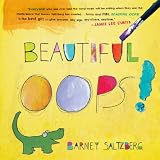
by Barney Saltzberg
Bright, tactile picture book that treats spills, smudges, and tears as starting points for art rather than failures. Pages pair simple statements with die-cuts and lift-the-flap possibilities, so adult and child can turn an "oops" into a deliberate mark together. What works best is its permission-giving, playful approach — useful for calming perfectionism around early drawing. Limitation: adults wanting more narrative depth or older kids expecting nuance will find it repetitive and cuteness-heavy; the interactive gimmicks can feel thin after several readings.
This summary and audience guidance are AI-generated from the book's description and its recommendation history, last updated June 2026. Recommendations, quotes and sources elsewhere on this page come from published material and are not generated.
A spill. A smear. A smudge. A tear. When you think you have made a mistake, think of it as an opportunity to make something beautiful! A life lesson that all parents want their children to learn: It?s OK to make a mistake. In fact, hooray for mistakes! A mistake is an adventure in creativity, a portal of discovery. A spill doesn?t ruin a drawing?no...
Difficulty:hard
Check formats, pricing, and availability options for Kindle, physical print, or audiobooks directly.
View available editions on AmazonWhy recommended
appears in Art History, Art, and Children's.
Recommendation proof is sourced from public posts, interviews, reading lists, and cited references.
No verified recommendation proof available yet.
Check formats, pricing, and availability options directly on Amazon.
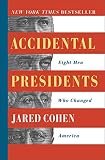
Consider Accidental Presidents by Jared Cohen. Recommended by 10 sources.
“Accidental Presidents offers eight narrative portraits of men who succeeded to the U.S. presidency without election, using anecdote-rich scenes and readable context to show how personality and circumstance interact with office power. It’s strongest as a set of self-contained stories that make succession stakes concrete for non-specialist readers; it does not prioritize dense archival argument or exhaustive methodology, so expect some interpretive generalizations and repeated themes across cases. Use it for fast historical orientation rather than scholarly deep-dives.”

Each recommendation is collected from a public source — interviews, articles, or curated lists — and linked to its original URL. Books with many verifiable recommendations from respected people rank higher.