
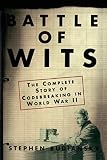
Battle of Wits
The Complete Story of Codebreaking in World War II
by Stephen Budiansky
Reading Profile
Should I read this?
Reads like a dossier stitched into narrative form: close, document-centered reconstructions of specific decrypts and their operational ripple effects. Early chapters deliver sharp incidents that show how signals fed commanders' choices; mid sections settle into dense technical explanation and run-throughs of intercepted traffic that demand attention. Most useful are the concrete incident timelines and quotations from primary material; most annoying are prolonged mechanical expositions and repeated chronological recaps that make pacing flag. Expect rewards if you enjoy evidence-first history; otherwise patience will wear thin.
Read this if...
- •a military historian writing a chapter on WWII naval intelligence who needs detailed archival examples showing how decrypts influenced specific operations
- •an intelligence-analyst-in-training at a defense academy preparing a lecture or briefing who wants concrete incidents of signals intercepts affecting battlefield choices
- •an advanced history student researching Midway or late-war European naval operations who must cite primary-document detail and can tolerate technical exposition
Skip this if...
- •you'll likely put it down when long passages unpack cipher traffic, machine mechanics, or chronological tabulations pile up and the pace grinds
- •annoying if you prefer character-driven storytelling: the book prioritizes documents and operational outcomes over intimate portraits or emotional arcs
- •skip if you want a light weekend read — dense archival material and repeated technical points make it better as a paced, chapter-by-chapter read
A million pages of new World War II codebreaking records have been released by the U.S. Army and Navy and the British government over the last five years. Now, Battle of Wits presents the history of the war that these documents reveal. From the battle of Midway until the last German code was broken in January 1945, this is an astonishing epic of a ...
Before You Buy
Reading Specifications
Difficulty:hard
Audience Fit
- a military historian writing a chapter on WWII naval intelligence who needs detailed archival examples showing how decrypts influenced specific operations
- an intelligence-analyst-in-training at a defense academy preparing a lecture or briefing who wants concrete incidents of signals intercepts affecting battlefield choices
- an advanced history student researching Midway or late-war European naval operations who must cite primary-document detail and can tolerate technical exposition
- you'll likely put it down when long passages unpack cipher traffic, machine mechanics, or chronological tabulations pile up and the pace grinds
- annoying if you prefer character-driven storytelling: the book prioritizes documents and operational outcomes over intimate portraits or emotional arcs
- skip if you want a light weekend read — dense archival material and repeated technical points make it better as a paced, chapter-by-chapter read
Check formats, pricing, and availability options for Kindle, physical print, or audiobooks directly.
View available editions on AmazonKey themes
Why recommended
appears in Cryptography, History, and Nonfiction.
Recommendation Signals
Recommendation proof is sourced from public posts, interviews, reading lists, and cited references.
No verified recommendation proof available yet.
Appears In
Not sure if this is the right fit?
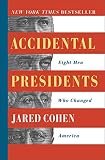
Consider Accidental Presidents by Jared Cohen. Recommended by 10 sources.
“Accidental Presidents offers eight narrative portraits of men who succeeded to the U.S. presidency without election, using anecdote-rich scenes and readable context to show how personality and circumstance interact with office power. It’s strongest as a set of self-contained stories that make succession stakes concrete for non-specialist readers; it does not prioritize dense archival argument or exhaustive methodology, so expect some interpretive generalizations and repeated themes across cases. Use it for fast historical orientation rather than scholarly deep-dives.”
Similar books



How recommendation signals are reviewed
Each recommendation is collected from a public source — interviews, articles, or curated lists — and linked to its original URL. Books with many verifiable recommendations from respected people rank higher.