BookMentionsBookMentions
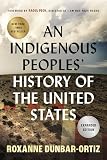
An Indigenous Peoples' History of the United States
1 recommendations

An Indigenous Peoples' History of the United States

by Roxanne DunbarOrtiz

Recommended by Margari Aziza

Recommended by Margari Aziza

Check price on Amazon

Proof-backed recommendation

Amazon availability

Reading Profile

Difficulty:hard
Themes:Indigenous perspective vs textbook narrativesettler colonialism vs national myth

Should I read this?

Opens by retelling U.S. history from Indigenous perspectives, pairing archival detail with a sustained political critique of settler colonialism. Valuable as a corrective to textbook narratives: it documents dispossession, policy, and resistance, and links past acts to present institutions and public memory. Limits: a polemical tone and dense, repetitive documentation can feel heavy; readers expecting a neutral chronology or a breezy survey will chafe. Demands attention rather than casual skimming and offers depth for readers ready to sit with uncomfortable reckonings; it contains no hands-on exercises.

Read this if...

  • High-school or college history teacher redesigning a U.S. survey syllabus who needs primary-source-driven counter-narratives and concrete case studies to introduce Indigenous perspectives into class discussion.
  • Graduate student writing on settler colonialism or Indigenous dispossession who wants a broad, argument-forward secondary narrative to frame citations and shape literature review sections.
  • Local land-rights or community organizer researching historical background for a campaign about treaties or municipal policy; helpful for connecting historical policies to present legal and civic contexts.

Skip this if...

  • You’ll likely put it down when the book shifts into long sections that restate similar episodes of dispossession—if repetition or sustained polemic wears you out, the mid-to-late chapters are the common drop-off point.
  • Annoying if you prefer a neutral, detached tone or a strictly chronological textbook; the author writes with clear political purpose and conviction rather than even-handed distance.
  • Not for readers who wanted quick summaries, maps, or step-by-step practical actions—this is argument-driven history and it lacks hands-on exercises or lightweight visual summaries.

The first history of the United States told from the perspective of indigenous peoples Today in the United States, there are more than five hundred federally recognized Indigenous nations comprising nearly three million people, descendants of the fifteen million Native people who once inhabited this land. The centurieslong genocidal program of the...

Before You Buy

Reading Specifications

Difficulty:hard

Themes:
Indigenous perspective vs textbook narrativesettler colonialism vs national mythdispossession episodes vs legal continuity

Audience Fit

Recommended for:
  • High-school or college history teacher redesigning a U.S. survey syllabus who needs primary-source-driven counter-narratives and concrete case studies to introduce Indigenous perspectives into class discussion.
  • Graduate student writing on settler colonialism or Indigenous dispossession who wants a broad, argument-forward secondary narrative to frame citations and shape literature review sections.
  • Local land-rights or community organizer researching historical background for a campaign about treaties or municipal policy; helpful for connecting historical policies to present legal and civic contexts.
Not ideal if you want:
  • You’ll likely put it down when the book shifts into long sections that restate similar episodes of dispossession—if repetition or sustained polemic wears you out, the mid-to-late chapters are the common drop-off point.
  • Annoying if you prefer a neutral, detached tone or a strictly chronological textbook; the author writes with clear political purpose and conviction rather than even-handed distance.
  • Not for readers who wanted quick summaries, maps, or step-by-step practical actions—this is argument-driven history and it lacks hands-on exercises or lightweight visual summaries.

Check formats, pricing, and availability options for Kindle, physical print, or audiobooks directly.

View available editions on Amazon

Key themes

Indigenous perspective vs textbook narrativesettler colonialism vs national mythdispossession episodes vs legal continuityresistance and survival vs erasurearchival documentation vs political argument

Why recommended

Recommended by 1 source and appears in Native American, History, and American History.

Recommended by notable people

People and public figures who have recommended this book.

Recommendation Signals

Recommendation proof is sourced from public posts, interviews, reading lists, and cited references.

M

Margari Aziza

Recommended this book

Appears In

Accidental Presidents
Try This Instead

Not sure if this is the right fit?

Consider Accidental Presidents by Jared Cohen. Recommended by 10 sources.

Accidental Presidents offers eight narrative portraits of men who succeeded to the U.S. presidency without election, using anecdote-rich scenes and readable context to show how personality and circumstance interact with office power. It’s strongest as a set of self-contained stories that make succession stakes concrete for non-specialist readers; it does not prioritize dense archival argument or exhaustive methodology, so expect some interpretive generalizations and repeated themes across cases. Use it for fast historical orientation rather than scholarly deep-dives.

Similar books

How recommendation signals are reviewed

Each recommendation is collected from a public source — interviews, articles, or curated lists — and linked to its original URL. Books with many verifiable recommendations from respected people rank higher.

An Indigenous Peoples' History of the United States

An Indigenous Peoples' History of the United States

View on Amazon →