
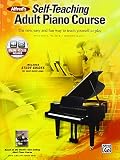
Alfred's SelfTeaching Adult, Piano Course
The new, easy and fun way to teach yourself to play, Book & Online Audio
by Willard A. Palmer, Morton Manus
Amazon availability
Reading Profile
Should I read this?
Hands-on, stepwise beginner piano course written for adults who want to learn without a teacher. Lessons mix short explanatory pages, notated examples, and study-guide prompts so you practice skills before moving on; it's organized like a private-lesson syllabus translated into print. Main value: steady, predictable progression that teaches reading, rhythm and simple repertoire at a gentle pace. Main limitation: very methodical—players who want improvisation, pop-song shortcuts, or an ear-first approach may find it slow and prescriptive.
Read this if...
- •a mid-career office manager who bought a home keyboard and can only practice 20–30 minutes daily — needs a clear, bite-sized lesson plan to make steady progress without a teacher
- •a recently retired person looking for a structured hobby and comfortable with reading notation — wants gradual skill-building and familiar, printed guidance
- •a self-taught guitarist moving to piano who wants to learn formal notation and rhythm — needs a graded, readable route from basics to simple repertoire
Skip this if...
- •you'll likely put it down when the methodical drills and notation explanations take over and slow the pace of actual songs; slow-to-song chapters are common drop-off points
- •annoying if you prefer learning by ear, improvisation, or chopping songs into quick hacks — this is notation-first and prescriptive
- •lose interest if you want modern pop arrangements immediately or crave multimedia support (audio/video) — the book expects you to practice from the page
Continuing the incredible popularity of Alfred's Basic Adult, Piano Course, this new book adapts the same friendly and informative style for Adult,s who wish to teach themselves. With the study guide pages that have been added to introduce the music, it's almost like having a piano teacher beside you as you learn the skills needed to perform popular ...
Before You Buy
Reading Specifications
Difficulty:hard
Audience Fit
- a mid-career office manager who bought a home keyboard and can only practice 20–30 minutes daily — needs a clear, bite-sized lesson plan to make steady progress without a teacher
- a recently retired person looking for a structured hobby and comfortable with reading notation — wants gradual skill-building and familiar, printed guidance
- a self-taught guitarist moving to piano who wants to learn formal notation and rhythm — needs a graded, readable route from basics to simple repertoire
- you'll likely put it down when the methodical drills and notation explanations take over and slow the pace of actual songs; slow-to-song chapters are common drop-off points
- annoying if you prefer learning by ear, improvisation, or chopping songs into quick hacks — this is notation-first and prescriptive
- lose interest if you want modern pop arrangements immediately or crave multimedia support (audio/video) — the book expects you to practice from the page
Check formats, pricing, and availability options for Kindle, physical print, or audiobooks directly.
View available editions on AmazonKey themes
Why recommended
appears in Piano and Nonfiction.
Recommendation Signals
Recommendation proof is sourced from public posts, interviews, reading lists, and cited references.
No verified recommendation proof available yet.
Ready to read Alfred's SelfTeaching Adult, Piano Course?
Check formats, pricing, and availability options directly on Amazon.
Appears In
Not sure if this is the right fit?
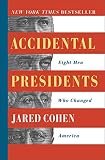
Consider Accidental Presidents by Jared Cohen. Recommended by 10 sources.
“Accidental Presidents offers eight narrative portraits of men who succeeded to the U.S. presidency without election, using anecdote-rich scenes and readable context to show how personality and circumstance interact with office power. It’s strongest as a set of self-contained stories that make succession stakes concrete for non-specialist readers; it does not prioritize dense archival argument or exhaustive methodology, so expect some interpretive generalizations and repeated themes across cases. Use it for fast historical orientation rather than scholarly deep-dives.”
Similar books

How recommendation signals are reviewed
Each recommendation is collected from a public source — interviews, articles, or curated lists — and linked to its original URL. Books with many verifiable recommendations from respected people rank higher.