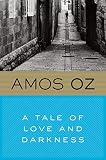
by Amos Oz


Proof-backed recommendation
Amazon availability
A Tale of Love and Darkness reads as a richly textured, often elegiac coming-of-age memoir set against wartime Jerusalem, alternating close domestic vignettes with wider notes about upheaval. The book's strengths are intimate scenes—family quarrels, a child's bookish hunger, precise portraits of loss—that linger in the mind. Its limits are frequent digression and repetition: images and reflections recur until the forward motion feels stalled. Best for readers who enjoy dense, reflective prose rather than brisk storytelling.
This summary and audience guidance are AI-generated from the book's description and its recommendation history, last updated June 2026. Recommendations, quotes and sources elsewhere on this page come from published material and are not generated.
Tragic, comic, and utterly honest, A Tale of Love and Darkness is at once a family saga and a magical selfportrait of a writer who witnessed the birth of a nation and lived through its turbulent history.It is the story of a boy growing up in the wartorn Jerusalem of the forties and fifties, in a small apartment crowded with books in twelve langua...
Difficulty:hard
Check formats, pricing, and availability options for Kindle, physical print, or audiobooks directly.
View available editions on AmazonWhy recommended
Recommended by 2 sources and appears in Nonfiction.
People and public figures who have recommended this book.
Recommendation proof is sourced from public posts, interviews, reading lists, and cited references.
Natalie Portman
Israeli-American actress (born 1981)
“My five favourite Jerusalem books: the Diaries of Wasif Jawhariyyeh, Jewish Wars by Josephus, Tale of Love & Darkness by Amos Oz, Yoram Ottolenghi’s Jerusalem and what else The Bible of course. The superlative Jerusalem book.”
Check formats, pricing, and availability options directly on Amazon.
Consider Accidental Presidents by Jared Cohen. Recommended by 10 sources.
“Accidental Presidents offers eight narrative portraits of men who succeeded to the U.S. presidency without election, using anecdote-rich scenes and readable context to show how personality and circumstance interact with office power. It’s strongest as a set of self-contained stories that make succession stakes concrete for non-specialist readers; it does not prioritize dense archival argument or exhaustive methodology, so expect some interpretive generalizations and repeated themes across cases. Use it for fast historical orientation rather than scholarly deep-dives.”

Each recommendation is collected from a public source — interviews, articles, or curated lists — and linked to its original URL. Books with many verifiable recommendations from respected people rank higher.