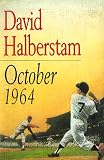
by David Halberstam
Recommended by Mark Hertling
Check price on AmazonProof-backed recommendation
Amazon availability
Halberstam reconstructs the 1964 World Series with close, scene-driven reporting, interweaving game recaps and player vignettes that evoke the atmosphere of midcentury baseball. The book's useful part is its rich period detail and feel for clubhouse personalities, which reward readers who enjoy narrative immersion and play-by-play color. Its main limitation is pacing: lengthy descriptive passages and repeated game minutiae pile up, so readers seeking concise synthesis, modern context, or a brisk historical take may find it slow and occasionally repetitive.
This summary and audience guidance are AI-generated from the book's description and its recommendation history, last updated June 2026. Recommendations, quotes and sources elsewhere on this page come from published material and are not generated.
THE NEW YORK TIMES BESTSELLER THE BEST SPORTS BOOK OF THE YEAROctober 1964 should be a hit with oldtime baseball fans, who'll relish the opportunity to relive that year's todiefor World Series, when the dynastic but aging New York Yankees squared off against the upstart St. Louis Cardinals. It should be a hit with younger students of the game,...
Difficulty:hard
Check formats, pricing, and availability options for Kindle, physical print, or audiobooks directly.
View available editions on AmazonWhy recommended
Recommended by 1 source.
People and public figures who have recommended this book.
Recommendation proof is sourced from public posts, interviews, reading lists, and cited references.
Mark Hertling
“I’d add one more great book, “October 1964.” The social and race implications of the 64 YankeesCards series.”
Check formats, pricing, and availability options directly on Amazon.
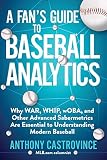
Consider A Fan's Guide to Baseball Analytics by Anthony Castrovince.
“Castrovince writes in a breezy, conversational tone that makes advanced box-score ideas approachable for fans familiar with batting average and ERA. Sections on pitching, fielding, and hitting use real-game examples and plain-language definitions so you can tell which metrics matter and why. The limitation is limited technical depth: formulae and modeling are explained at a conceptual level rather than worked out step-by-step, so experienced sabermetricians may find parts repetitive or shallow. Useful for game-day decisions and explaining stats to others; not a data lab.”

Each recommendation is collected from a public source — interviews, articles, or curated lists — and linked to its original URL. Books with many verifiable recommendations from respected people rank higher.